Archive for the Category »Travel «

Garissa

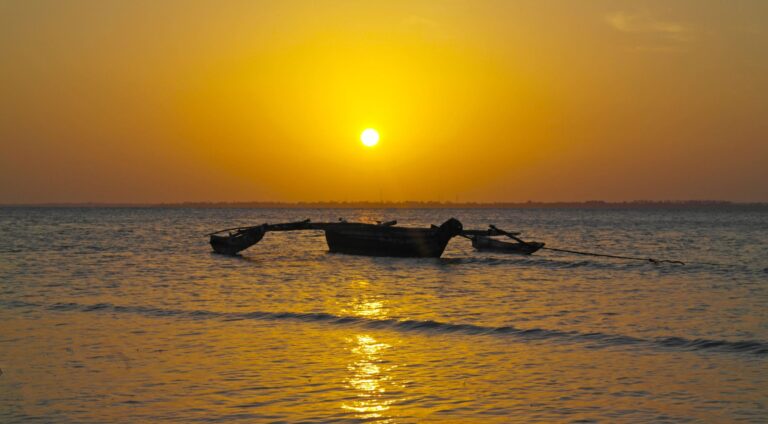
Picture: Garissa Camel Sunset 300x168 Garissa

Sunset in Garissa

Garissa Town is the headquarters of Garissa County, and the gateway to North-Eastern Kenya.

Going to Garissa by road, will initially send you through Thika Road. Perpetually jammed over the past decade, this road is currently being upgraded into a 12-lane superhighway. This  prestige project of president Mwai Kibaki and his coalition partner, Prime Minister Raila Odinga, will doubtlessly be written into Kibaki’s legacy when he retires in 2012 (did someone say “Kibaki Highway”?).

Shortly after Thika, the landscape changes. From the green, crowded surroundings of Nairobi, you suddenly enter the hilly, semi-arid and sparsely populated Ukambani (land of the Kambas).

Picture: Last mountain before Hargeisa 300x199 Garissa

Garissa - "Last mountain before Hargeisa"

After Mwingi, the home town of Vice President Kalonzo Musyoka, the landscape gradually gets flatter and more arid, where dry riverbeds bear witness of the seasonal droughts.  Eventually, you reach what locals emphasize is the “last mountain from here to Hargeisa”, and after that, the landscape turns completely flat, monotonous, and densely covered with low bushes. The last strech of a few km is the only part where the road is seriosuly potholed, so when you get there, you know you are close. The police checkpoint by the river is the “entrance portal”, and once past it, there you are!

Picture: Garissa town centre 300x199 Garissa

Garissa town centre

Garissa Town is a peaceful and quiet place, that takes great pride in its official status as the safest in Eastern and Central Africa. It is mainly  place where the pastoralists living in the surrounding areas come in to do business during the day, and then go back home. As a consequence, Garissa Town doesn’t offer urban attactions, night clubs or wining and dining. That is not what people would go there for in the first place, as the top attractions are outside town. There are plenty of small shops, though, and every Wednesday, the town is bustling with life during the Market Day.

Garissa is the unofficial capital of Kenya’s Somali community, and a showcase of their culture. It’s probably the best way to experience the Somali way of life without crossing into Somalis proper – a journey few non-Somalis without a death wish would consider.

Enter into a conversation with any local, and the friendliness and hospitality, key to the Somali culture strikes you. The general mood is hectic and energetic, and any interaction lasting more than a few minutes is generally accompanied by a cup of boiling hot spicy tea, with lots of milk and sugar.

A very remarkable difference between the Somali parts of Kenya and the rest of the country, is time observance. In most of Kenya, especially outside Nairobi, things go by AST (African Standard Time). Not so in Garissa, where time consciousness is at a North European level.

Picture: Garissa Cows in town 300x163 Garissa

Cows roaming the streets in the outskirts of Garissa Town

As most of the population in the region are pastoralists, livestock is a prominent aspect of the town and its surroundings. Cows, camels and goats roam the streets, and fresh, delicious meat is dirt cheap. In addition to the town’s current abattoir – a cornerstone of the local economy – a new, high-capacity one, is being planned with the aim of turning Garissa into a global meat exporter.

There are 2 very nice hotels: the Nomad Palace and the Almond Resort. These are completely up to international standards, yet nicely priced (€24 per night at the Nomad Palace). They also have nice restaurants with amazingly tasty steaks and meat stews.

Picture: 3 Camels 300x168 Garissa

Camels "dining" around a bush in the outskirts of Garissa

The fact that Garissa outclasses far bigger, and assumingly more cosmopolitan towns in Kenya in terms of hotels, can probably be seen in connection with the Somali business spirit. Aggressive entrepreneurialism is a key component of the culture, and that is probably the reason why the economic impact of the Somali community is increasingly being felt all over Kenya.

Picture: Garissa Grand Mosque 199x300 Garissa

Garissa Grand Mosque

Garissa is an overwhelmingly muslim place, crowded with cute little mosques. None of the quality hotels serve alcohol, or even allow guests to bring it, and of all the gin joints in all the towns in all the world, you’re not likely to walk into one here. I did see a small place advertising the sale of booze in an outskirt of town, but clearly, this is no place for the thirsty traveller. Those are not in Garissa’s target group in the first place, so if you plan on rocking all night, you might want to consider Mombasa instead.

Picture: Giraffes 300x185 Garissa

Garissa Giraffe Sanctuary

Tourism is the new strategy for Garissa as a second leg for the local economy, in addition to livestock.  With the introduction of local governments in Kenya as a result of the new constitution, Garissa County looks set to invest aggressively in attracting visitors.

Picture: Gerenuks Giraffe Gazelles 300x189 Garissa

Gerenuks (Giraffe Gazelles) in the Garissa Giraffe Sanctuary

There is already the Bouralgy Giraffe Sanctuary, with a growing population of Rotschild giraffes.  Other animal species in the sanctuary include the rare, long-necked Gerenuk (aka. “giraffe gazelle”), that only exists in this part of East Africa. The park also encompasses smaller populations of 26 other species of game animals, and more than 450 bird species. It is just 10 minutes south of Garissa town, along the green river belt, lush with acacia trees. Built and maintained by local visionaries, the park has suffered from the lack of support by the central government and the meagre resources available to previous local authorities. With the new, strengthened local governments in Kenya, the giraffe sanctuary is already being targeted for significant upgrading.

Picture: Garissa River 300x199 Garissa

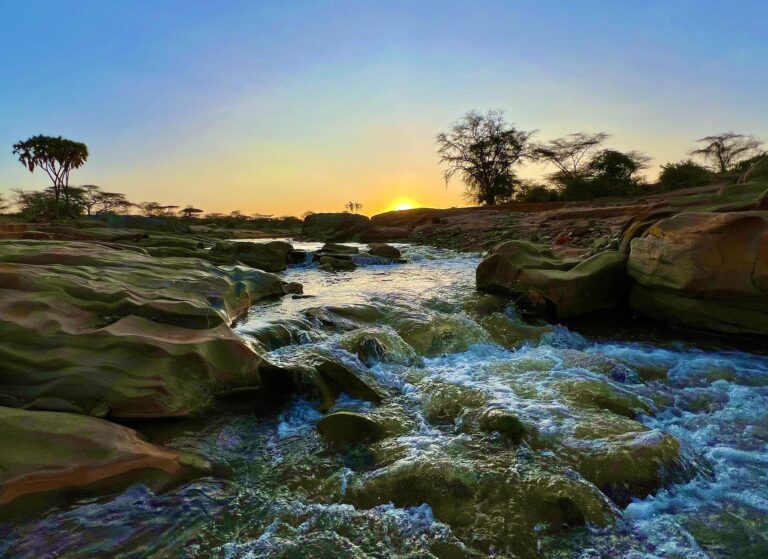
Tana River in Garissa

Tana River, one of the major ones in Kenya, runs just outside Garissa town. Crowded with snakes and crocodiles, it has a great potential to attract adrenaline-seeking travellers, ready to pay what it costs to get close to the dangerous animals in a boat. Unfortunately, there was no such option available during my visit, so I hope someone from the soon-to be-created Garissa County tourism board is reading this, and acts on it by the time I return!

You don’t have to travel far outside Garissa before you find yourself in the wilderness. The surrounding landdcape of dry shrubs and bushes, and coarse sands, are one big pasture for thousands of camels, goats, cows and donkeys. Occasionally, you will also spot small villages of semi-permanent structures made from mud or straws, that are the homes of the many pastoralist families inhabiting the area. Considering the booming tourist business by North African bedouins, offering camel rides in the desert, and meals and shelter in tents, expect similar packages to be offered to travellers in Garissa in the near future.

The combination of safety, good infrastructure and massive cash inflows from the Somali diaspora has made Garissa the fastest-growing town in Kenya. The impressive thing is how this growth has been achieved without a rise in crime. The place still has the atmosphere of a cosy and quiet small town, with no highrises and only a few multi-storey buildings. That is likely to change in the coming years as the growth continues.  As tourism is a rather new concept being promoted, it is still very much “work in progress”, but with great potential.  Local forces are agressively pushing to promote this new source of growth. The director of the Giraffe Sanctuary even came with me in the car, for a personal guided tour when I visited the park! Expect to see camelback desert expeditions with village sleepovers, and crocodile sighseeing river cruises being marketed massively in the coming years. I know for a fact that I will be among the first to try out those activites once they are launched!

Eldoret

Picture: Eldoret 300x199 Eldoret

Eldoret, in the Rift Valley

Eldoret, the capital of the Kalenjin, situated in the heart of Rift Valley, was the first place I visited in Kenya outside Nairobi. Back then, I was a young and excited trainee through AIESEC, the global student organization that brought me to Kenya the first time. That was on my 4th day in Kenya, and I was still busy getting overwhelmed with all the impressions from this marvelous country, at that time still unknown to me.

I can still vividly recall the slow and uncomfortable bus ride, in a dirty and shaky ramshakle on horrendously potholed roads, through the lush, green landscapes of the Rift Valley.

That was 2002. 8 years on, the scenery is still green and pittoresque, however, the quality of the roads has improved dramatically, and the cars driving on them are newer and bigger.
Eldoret is a cosy little town, but without any really characteristic features. It is generally pretty clean and well-kept, but without anything to see or do in the town itself. The surrounding Rift Valley has some spectacular sceneries, though, and the nearby Eldama Ravine offers a breathtaking view of the Valley from the top of the escarpment.

There are no real high-quality hotels in Eldoret. The best option available is the much-touted Sirikwa. Clearly, the place once had some grandeur about it, but it is now so worn-down that the only reason for staying there is the lack of better options. The staff are very polite and friendly, though, and that is always a plus. The rooms are also decently clean.

Other options include The Wagon, just opposite Sirikwa, and Klique. The latter two are simple and cheap options, without much to write home about, except the fact that they have rooms, and restaurants with some atmosphere. The Wagon also has a bar that gets quite lively during weekends.

There are also some ok night clubs that get extremely crowded during the weekends. Signature is probably the most famous one, and that’s a good place to feel the pulse of Eldoret if you’re there during a weekend night. Extremely crowded, though.

Eldoret hardly features in the itinerary of the gourmet traveller, and don’t expect any of its restaurants to be featured in the Michelin Guide anytime soon. In fact, there aren’t too many restaurants there at all, except for the ones at the hotels. Sirikwa has a decent one, so does the Hotel White Castle. The one at The Wagon also has some pretty tasty curries. There are also 2 Chinese restaurants in Eldoret. The Elcove, recommended by some, is uninviting to the point where I walked out after merely looking in. Siam, a few blocks away, has more to offer. At least, that place has a bit of a Chinese atmosphere, and good food too!

This post was written from my Sony Ericsson X10, at Siam restaurant in Eldoret. The spicy chicken soup and and shredded pork in ginger and black bean sauce were definitely nice. Now it’s time for the date cake with ice cream! Picture: icon smile Eldoret

The Indian Wedding!

Indian weddings are widely reputed for their wildness and colourfulness. What I experienced in Mumbai did nothing to diminish that reputation!

After a somewhat chaotic late-night arrival, some hours of sleep and a bit of sightseeing, I was more than ready for the first of 4 receptions – the engagement party.

At a place called the The Club, in Andheri, for which the cab driver had to stop and ask for the way about 10 times, som 300-400 guests were gathered for what alledgedly was only a ”warm-up”. After a mandatory photo session on arrival, I entered the main hall, where Deepak and his fiancée were seated on a heavily lit, heart-shaped throne overlooking the dancefloor. Music was mostly 90ish techno, and some contemporary Indian music, with a light show going on and off in all different colours. In one corner, there was a bar with 2 hyperactive bartenders putting all their efforts into ensuring that noone in their vicinity was drinkless. Those further away from the bar would brought towards it by fellow guests should they end up drinkless for more than 60 seconds anyway!

Of my 2 workmates who were supposed to be there, my colleague Husam was unable to make it alltogether, and my boss, Hogne, wasn’t arriving until 2 days later. As the only non-Indian, I certainly stood out. The attention I received was almost overwhelming, in a very positive way though. People actually seemed to compete to make sure I was enjoying myself! Picture: icon biggrin The Indian Wedding!

In the West, the dancefloor is mainly the playground of people aged 15-35. Not so in India! While the music was mostly dance and techno from the mid-90s, mixed with contemporary Indian music, all generations were present on the dancefloor at any time – from those who had barely learnt to walk, to those who struggled to stand on their feet because of their old age! People from most of those generations also kept pulling me to the dancefloor throughout the night, while feeding me with drinks!

Basically all the guests, except the one gora were wearing colourful traditional outfits, further adding to the colorfulness of the experience!

The event was rather informal, without much official ceremony, except some cake-cutting where friends and family of the bride and the groom fed them small pieces, and were fed small pieces back.  That was all followed by some small dance-shows by young family members from both sides.

After that, it was just party on, with some food and snacks being served, and bartenders going belligerent.

“Open up your mouth!” a female voice commanded. The bartenders had started walking around with bottles, force-feeding guests deemed to drink too slowly. After some inital mouthfuls of whisky, the flaming drinks were on, with “victims” being held down on a seat while the deadly, flaming mixture were poured into their mouths. Again, age was the least of worries, from below 18 to probably above 80.

My resolve to stick to white wine and water whenever I was not being force fed, saved me from a deadly hangover the next day, and from the the discomfort of not remembering the way home. I even had the better part of the day after available for more sightseeing.

Friday morning at approx 9am. Still in bed, comfortably asleep as the first event didn’t start until 12. Or so I thought..

I woke up to the familiar sound of my phone: and Deepak wanting me to come early for the more traditional, family part of the wedding cermony.  My boss Hogne, who had flown in during that night was staying at the same hotel. As we linked up in the lobby, it turned out we had interpreted the dress code slightly differently: I was wearing a suit and a tie, he had a t-shirt and jeans!

Some of those quick Indian breakfast bitings that I quickly learnt to appreciate, but whose names I can never remember, were being served as we arrived at the venue (thank God!). We were then taken upstairs, where Deepak was being prepared for the ceremony.

The dressing up of the groom for an Indian wedding is a rather complex procedure that could easily be mistaken for the warm-up to a king’s crowning. Both Hogne and I got some great pictures of the moments when we were wrapped in the same pink turbans as Deepak’s family. Hogne solemnly swore that any picture of him with that headwear would be untagged from Facebook faster than i could tag it, so I had to post here on my blog instead! Picture: icon wink The Indian Wedding!

The shoe-stealing tradition is a remarkable feature of Indian, and generally South Asian weddings: The young girls have to steal the groom’s shoes, and after the wedding ceremony, he is forced to bargain on a ransom to have them released again. I knew nothing about this tradition until I was asked to get up in the horse-pulled chariot where Deepak was sitting and given a speedy introduction.  My role was to “guard” him against the shoe-stealing girls, and eventually fail my mission as they would steal the shoes anyway.

After the shoe-stealing, the wedding ceremony itself was far more quiet, mainly consisting of a Hindu priest performing rituals with the bride and the groom, followed long-lasting of bargaining before Deepak finally was able to buy his shoes back. After that, lunch!

“Be at the dinner at 10″ was the instruction ahead of the dinner. In India, that would usually mean “show up some time after 11″, but this was allegedly THE exception. “Better show up 15 minutes early”. Interpreting that as “try to be there before 11″, Hogne and I actually met at the hotel bar a few minutes before 10 to have a quick beer before going.

Arriving at the venue at around 10:45, we were clearly the first to arrive. Fortunately, attentive waiters made sure we were fully supplied with drinks and bitings for the one hour or so before the other guests arrived.

The dinner reception was another show of colourfulness with everyone in a party mood. The waiters being outright pushy with the bitings, I had little appetite left for dinner, but that hardly mattered anyway!  The dinner reception being a rather formal event, there was fortunately no force-feeding of drinks by the bartenders.  That was not needed in any case, as most people around were more than helpful in ensuring that I at any time had at least one drink in my hand.

On the final event, a cocktail party, my plan was to take it rather easy as I was flying to Udaipur the next morning.  Hogne was leaving on an even earlier morning flight, and had prepared himself to go straight from the party to the airport.

Having caught a quick beer in the hotel bar, Hogne and I started the daunting task of finding the venue.  The tuktuk driver clearly had no clue, but was afraid to admit that. He therefore kept stopping every 5 minutes telling us “it’s here”. since we clearly didn’t believe anything he said, he immediately went on to ask someone for the road – again – after each attempt.

After approximately 20 attempts, he managed to drop us at the right place, and also to rip me off on the change! Who cares anyway? Hope the sucker choked on the money!

This time around, we had gotten the timing better. At least the other guests had started arriving!  As usual, loads of fun and friendly people!  Someone had decided though, that my self-proclaimed allergy against hard liquor would not go unchallenged.  During the previous events, I had turned down most offers of whisky, vodka, tequilla or other beverages stronger than wine. Upon my refusal, I was physically held down on my seat, and force fed with shots the size of tea cups. Almost immediately after, the bartender returned with a big, evil smile: “Excuse me sir, someone told me you could take 2 more”.

Needless to say, sobriety was not a key charactheristic of the previous hours of that evening. The last round of force feeding sent me somewhat off balance, cutting the evening (and my memory) a bit short.

At 11:40 the next morning I found myself rushing in front of a long check-in queue in the hotel recepetion, explaining the lady there that I needed to complete the check-out on a rather short notice. “Sure, sir. Just give me 10 minutes” she replied. “I DON’T HAVE 10 MINUTES! MY FLIGHT IS LEAVING IN 50!” I shouted back at her.

Less than 30 minutes before departure to Udaipur, I rushed in at the last minute at Mumbai Domestic Airport, as the check-in for my flight was about to close. Udaipur, “India’s Venice” next. Updates will follow.

Arriving in Mumbai!

From the flight, I entered a crowded terminal building at 2:30 am. At least 3 unrelated queues seemed to be cutting through each other in a system that apparently no first-time visitor was supposed to understand anyway. I looked behind me at an Indian couple and asked if they had any clue whether this was the right queue from our flight. “No idea! Welcome to Mumbai!” was their laughing answer!

The zigzag queue was moving rather fast, only slowed down by the staff queue cutting through it in a somewhat chaotic way. “You can fill in the forms later. Just get screened first” a lady with a mouthcover shouted. From the swine flu declaration form that I had been given to fill in on the flight, I guessed that this was somehow related to a pandemic control effort.

Suddenly, the queue ended in front of some 20 counters. There was no system whatsoever, just a first-comes-first-served rush to the counters. As I saw one that was free, I went to that one, but the person behind it was asleep. Fortunately, the adjacent counter became free the next moment.

“Proceed to immigration control” he said, taking my declaration form without even looking at it.

At the end of a new, fast-moving queue, ending at some 40 new counters, stood an airport official shouting out a number for each passenger passing. “19″ he shouted when it my turn, meaning go to counter 19. Apparently, his job was to keep an overview of the queues at each counter, and decide which queue each passenger should go to.

Another quick look at the passport, and then another passport control immediately after. This time only one entrance point for all, hence a much longer queue.

Finally I was in the arrivals hall. The first thing that met me, was a duty-free shop with agressive salespeople trying to hook in anyone who as much as looked at the shelves. 3 minutes and one Johnnie Walker later, I was trying to find out on which band luggage from flight 543 from Dubai could be found. Some signs would’ve been useful, but I managed nevertheless.

“What’s in that bag” the gentleman at some new luggage screening point wanted to know. “A wedding gift” I said, and was about to specify the contents of the 2 boxes, but he just waved me through.

The friendly old couple seated next to me on the plane has strongly advised me not under any circumstance to take any of the taxis trying to pick up passengers outside the airport. The safer alternative was the Prepaid Taxis with offices inside the airport building, where one would pay upfront to get to a specific destination, with a designated driver, pre-empting the most common forms of taxi fraud.

190 Rupees to the Sahara Star Hotel, and of course they didn’t take cards. There was only one ATM in the area, at the end of the hall, just past some checkpoint where a security guard was trying to look busy. “Excuse me sir” he said after I had walked past him. “Just getting cash in the ATM” I said without slowing down. “OK” I heard from behind me.

To the delight of the exchange bureaus, fighting to hook in travellers passing by, that only ATM in the whole area was out of order.  By pure luck, I had been too tempted by the sight of an ice cream place in the departures hall in Dubai, and therefore withdrawn a few more Dirhams just before boarding the plane. The rather timid amount of cash that I had on me turned out to be more than enough to cover the taxi.

Eventually, I found myself in a taxi on the way to the hotel. Interrupted only by a couple of stops where the driver assured me “just a moment sir”, before disappearing for a few minutes, I finally arrived at the hotel, only a few blocks away from the airport.

From the outside, the Sahara Star looks like a sports stadium still under construction. From the inside, it’s borderline tacky. A cylindrical building built around an inner court with a night club, aquarium and an artificial lagoon with a handful of restaurants it sure offers enough diversions for business travellers who want to stay close to the airport and not leave the hotel.

The hotel staff were extremely friendly though, and overwhelmingly service-minded. While checking in, I pulled out 2 simple phrases in the local language, Marathi. Pretty much the only ones I knew. That was so popular among the hotel staff, though, that it took me a while to get the hotel room for myself after checking in. The guy who brought my luggage to the room even wanted to call some of his colleagues to the room just for them to hear a gora speak Marathi. I almost felt bad about refusing, but I was simply dead tired!

OK. More from the trip will follow soon! Picture: icon smile Arriving in Mumbai!

Dubai – Splendidly superficial!

Picture: Burj Dubai 2 199x300 Dubai   Splendidly superficial!Somebody once told me that the best thing to do in Dubai is to rent a car at the airport, and drive to Muscat in Oman.  Although I disagree, I still find the city stunningly superficial, and borderline tacky.

Dubai is a story of rapid wealth inflow, and of extravagant structures attempting to compensate the lack of a past worth mentioning.

In a few decades, the place has grown from a a small seaport town to a 3m+ city with some of the most spectacular constructions of modern times. It has become a playground of architects and engineers, and a magnet for people looking a to show off spending a lot of money.

In the current heart of Dubai, the Business Area, is the world’s tallest structure – the Burj Dubai.  Adjacent to it is the Dubai Mall – a shopping mecca blown out of proportions. It’s the world’s largest mall, cost $20 billion to build, and has 1200 shops. Other attractions are an indoor aquarium, a waterfall and an ice rink.

Needless to say, all the famous and expensive fashion brands, such as Gucci, Versace, Dolce Gabbana, Dior, Armani, etc. have shops in the Fashion Catwalk atrium, and any electronic gadget you can’t find on the 2nd floor, probably doesn’t exist. If you’re in for an unretained shopping spree, look no further!

Between the Dubai Mall and Burj Dubai is an artificial lake with the world’s most expensive ($218m) fountain. Every night, it offers a spectacular sound, light and water show where the fountain “dances” to music. That show is probably the most unmissable thing about Dubai, and should be the #1 point on the to-see list of anyone passing through.

A bit further down the lakeside is the Palace Hotel, with its not-so-well-known Pool Bar. Centered around a swimming pool, the place offers each visitor a tent with a comfortable couch with huge cushions. The ideal place to go for cocktails a sheeshah.

Another landmark of Dubai is the Burj al Arab, in the Jumeirah area. The world’s first 7-star hotel is still one of the first things people associate with Dubai, but is already being overshadowed by some of the more recent developments.

The articificial, palm-shaped peninsula of Palm Jumeirah so far has little to offer except luxurious apartments and villas. At the end of the road is another 7-star hotel: The Atlantis.

The little historic heritage the Dubai has is excessively well-preserved, and refurbished to the point of looking articficial. The Cultural Heritage Village, Dubai’s old town is well worth a visit, though.  There are even some very nice restaurants there, offering traditional arab food and delicious fresh fruit juices.

The recently opened Dubai Metro is still not entirely finished, but is functional on some of the stations. Taxis are cheap in Dubai, but getting from one end of the city to the other takes at the very least 45 minutes, so the Metro is a useful alternative. Of course it’s more environment-friendly to take the metro, too, but considering the excessive amounts of energy that Dubai is already blowing away on tacky luxury stuff, it is probably the place on Earth where it matters the least.

The shopping, the fancy restaurants and the funky architecture are certainly enough to keep you busy for a long weekend.  Besides those things, Dubai doesn’t really have a lot to offer, though. The place is extremely superficial, and that can be fun to some extent. For anyone passing through on the way to somewhere else, it’s definintely worth a stopover, but not much more.

Dubai is nevertheless a great playground for anyone with a camera and an eye for good pictures. The cool architecture is an open invitation to any photographer, and cheap energy makes the city an impressive light show at night. If you didn’t bring an SLR and a tripod, you’ll be at the right place to buy them anyway, so don’t leave Dubai without a bunch of good pictures!