
Blog Archives

Wining and dining in Nairobi

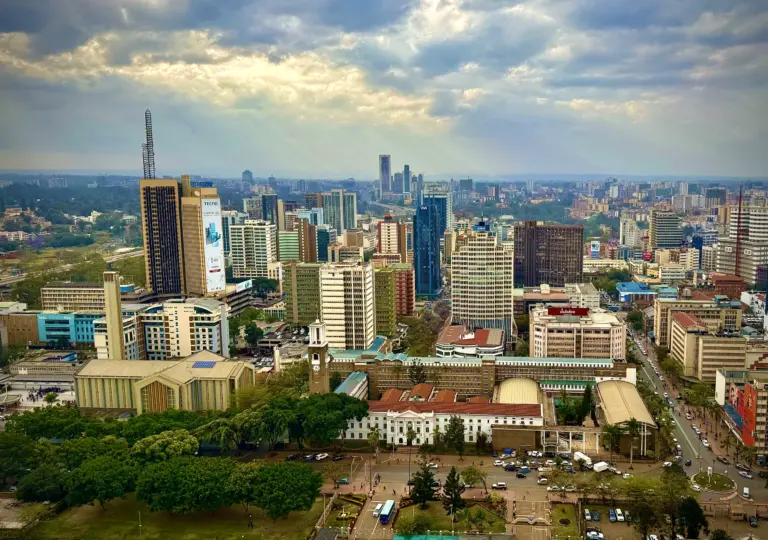
It’s been a while since I wrote my most popular blog post ever, City Guide to Nairobi – the Green City in the Sun, read over 30 000 times since I posted it. At that time, I was back in Norway, and wrote it out of nostalgia for a city that I love!

The good news is that I’m back in Nairobi now, and since returning, I’ve made a dedicated effort to explore all the new places that have popped up in the past few years.  As the city is booming, and there is ever more to do here, I’ll keep myself to more specific topics than a general guide to the city.  Passionate as I am about good food and nice restaurants, Wining and Dining in Nairobi is an obvious topic for me to write about, so that’s what I’m dedicating this post to!

Being a fast-growing, cosmopolitan city with a booming economy, Nairobi has an infinity of nice restaurants.  One could fill a book describing them all, so I am limiting myself to selection of some few, particularly recommendable ones. Many new places have popped up since the last time I lived in Nairobi (2002-2005), so there’s a lot to get excited about here!

Cedars

Cedars is THE old and famous Lebanese restaurant in Nairobi. It’s been around for as long as I can remember. At least it was there when I arrived in Nairobi the first time in 2002.  Once you enter this place, you notice the exquisit finishing of a high-quality restaurant.  It is owned by a Norwegian who has lived in Nairobi for decades, and  unlike most restaurants in Nairobi, who tend to lose their touch and become quite worn-down after a while, Cedars has kept it’s quality up.  Their Mezze are delicious, and the obvious easy choice for most people who eat there. That’s a bit unfortunate, because as great as their Mezze are, there’s also a great variety of other mouthwatering, top-quality Lebanese dishes. It’s among the pricier restaurants in Nairobi, but totally worth it.  Nice South African, and great Lebanese wines. They also have a small, but very popular bar, and they serve sheeshas in the tent outside.

Casablanca/Osteria

Casablanca is one of Nairobi’s most famous night clubs! The style is North African, with lanterns, comfortable couches, huge cushions, and of course sheeshas!  Although it has become a bit worn-down since their beginnings in 2005, they still maintain a style, quality and cosyness that makes it well worth the visits, despite being among the most expensive night club in the city.  They also have the best cocktails by far! Their waiters could be a bit faster, though, so don’t expect to get what you order for immediately. There’s also a certain market for personal services off the menu, but the providers of those services are fortunately not as pushy as in many of the other clubs in Nairobi.

Casablanca is co-located with the almost equally famous Italian restaurant Osteria, which unfortunately doesn’t quite live up to the reputation it is trying to maintain.  Despite the exquisit Italian rustique interior and romantic atmosphere, Osteria doesn’t quite live up to the expectations. They can even serve you soups made from instant-soup bags, and charge you KSh 800 (€8) for it!  They have some OK main courses, but are simply not worth the price. Fortunately, there are other nice Italian restaurants nearby.

DiVino

Avocado Red Snapper at DiVino, Nairobi

Grilled Red Snapper with Avocado at DiVino

DiVino, a relatively new restaurant on Argwings Kodhek Road is among the best choices you can make in Nairobi when going for a dinner.  The cuisine is international, Mediterranean-inspired. The design and the style are striking from the moment you enter. There is no doubt you are entering a high-class place! The atmosphere is relaxed and comfortable.  The seafood is outright excellent, and especially their grilled fish meals. Don’t miss out on the soups for startes either!

They also have nice, thin and crispy, Italian-style pizzas, and a good wine list. Like most Nairobi restaurants, even high-end ones, they don’t give you the name of the wines, though, only the type.

The waiters here are attentive of the customers’ needs, and you get what you order for quickly. That’s something you can only say about very few restaurants in Nairobi.

Sierra

Sierra

Sierra - balcony bar upstairs

Sierra is a rather new addition to Nairobi’s wining and dining world. Situated on the 2nd and 3rd floor at Yaya Centre, the downstairs is a bar, with the restaurant upstairs.  The design is posh, yet simple and elegant.  The menu is a bit short, with mostly quick, yet tasty meals and snacks. I particularly like their calamari, and they also have great burgers! There is a regular dining menu also, but I’m yet to try that one, so I’ll update this post once I have.  They have their own micro-brewery, so the beers they serve are from their own Sierra brand.

The balcony upstairs is a very comfortable – and popular place for afternoon beers, especially on Fridays, and is definitely worth a visit!

Habesha

When they started, Habesha, on Argwings Kodhek Road were a revolution for Ethiopian food in Nairobi. At that time, it was doubtlessly the best Ethiopian restaurant in Nairobi, with a beautiful, green garden restaurant and an informal, relaxed atmosphere. Of course, the food was tasty and delicious, the service was fast and the waiters friendly, and the owner was always present ensuring the place had his personal touch all the time.

Today, little is left of the Habesha that once was. The only reason why I’m even mentioning it here, is to warn people against going there! While the ambience remains, the food quality has degenerated into a tragedy, and severeal people, including myself, have fallen sick after eating at Habesha.  On top of that, the waiters will almost inevitably try to rip you off by inflating the bill, and insult you if you protest!

Smart Village

Smart Village

Smart Village

Fortunately, those who love Ethiopian food don’t even have to go far! On Kirichwa Road, Just off Argwings Kodhek Road, is a restaurant called Smart Village. It’s actually Eritrean, which is exactly the same (just don’t say that to an Eritrean, as they tend to dislike being reminded about it!).

The main section of Smart Village is a gigantic walled tent. The smell of incense and fresh roasted coffee beans are among the first impressions that greet you when you enter. The seats and tables are elegantly cut from woodlogs, giving the the place a very natural, down-to-earth ambience.

The food is reminescent of what Habesha used to have in the good old days, and they also have the characteristic layered cocktails of fresh fruit juices that you generally associate with Ethiopian/Eritrean restaurants, but that few actually have.

Misono

On Lenana Road, just after Cedars and Osteria/Casablanca, is Misono, a decently nice Japanese restaurant with a big reputation.  Their food is OK, but not excellent, and their sushis are not the best.  The interior and the atmosphere compensate somewhat for that, but not enough to justify the price level, which is among the highest in Nairobi.

La Salumeria

One of Nairobi’s most romantic, and well-kept secrets is La Salumeria.  Well hidden behind the charming, old Valley Arcade on Gitanga Road, this Italian restaurant is one you are not likely to stumble across unless you know exactly what you are looking for.  Not only does this place have an authenticity that none of the other Italian restaurants in Nairobi can match, it also has great food, and very skilled waiters that are fast, polite and attentive. They also know the food and wine list throughout, and can actually offer good advice, something which is quite unique for Kenyan waiters. The ultimate place for a date, guaranteed to impress whoever you are taking out!

Spring Garden

After my all-time favorite Chinese Restaurant – For You – burnt down to the ground 3 months ago, I was desperately looking for something the could even compare.  Amazingly, we incidentally stumbled across Spring Garden, on James Gichuru Road, just a few hundred meters off Gitanga Road.  This place has a similar, authentic Chinese ambience, quality interior design and great Chinese food.  They also have a nice garden, that could well have been better utilised for dining tables in a green setting.  Nevertheless, Spring Garden immediately took the top place on my list of Chinese restaurants in Nairobi.  The service is fast, the waiters are professional and friendly, yet the place has a very personal touch.

The icing of the cake is the price level.  Most meals here are KSh 400-600 (€4-6), placing it in the nice-price mid-level price range, yet with high quality.

Kengele’s Lavington

Kengele’s is a chain of mid-range, good quality restaurants in Nairobi. My favorite is the one on Lavington Mall, after the one opposite Yaya closed down.  The food is African/International, with tasty snacks and big TV screens for sports events.  Characteristially, all Kengele’s restaurants are lush and green, with lots of plants and ivy, giving a garden ambience. The one in Lavington even has an indoor waterfall!  Waiters can be dreadfully slow, though, so don’t go to Kengele’s if you’re in a hurry!

Havana

Already a legend, Havana in Westlands is more known as a pub than as a restaurant. A popular hangout spot for young expatriates during weekend nights, this place also has som excellent Latin American food.  Of course, the reputation as a nice place for drinks is well-deserved, and they certainly have nice mojitos too!

Onami

Located on top of the Westgate Mall, this is doubtlessly the best sushi place in Nairobi. It has the very posh and luxurious design and large space you can expect from a high-quality Japanese restaurant. The price level is quite high after Kenyan standards (€12-€20 for a good sushi meal), but totally worth it.

They have a wide selection of nigiri and maki, and it’s all top quality, so I would definitely recommend picking your own combination of sushi rather than going for any of the preset menus.

Le Rustique

A big favorite of mine in Nairobi!  Le Rustique, is a mediterranean restaurant in Parklands, on General Mathenge Drive.  True to it’s name, the place offers a rustique, South European style setting, with a cosy garden section, friendly waiters and decently quick(!) service.  The atmosphere is south european, and the food is mediaterranean, with a strong global fusion twist.

There is no regular menu, as they change it on a weekly basis, so you will always find something new. The seafood is generally excellent, and especially the fish. They have a short, but high-quality wine list, and a nice variety of fresh fruit juices (tree tomato juice being highly recommended)!

Corner Bistro

Corner Bistro

Corner Bistro

Located on the corner of Rhapta Road and Mvuli Road in Westlands, this garden restaurant is stylish, yet cosy.  The food is Italian, and actually stands out quite well from “standard” Italian restaurants in Nairobi with a pretty exciting menu. Their bacon-wrapped chicken in mustard sauce is excellent, so are their veal steaks.  Like most Nairobi restaurants, they only list the types, and not the names of their wines, but at least they have some selection to chose from. They also have great fresh fruit juices, especially their tangerine juice.

Tamambo

Tamambo is a brasserie-style restaurant at the Westlands Mall. It is part of the Tamarind Group, that has some of the best-reputed and highest-quality restaurants in Kenya.

The waiters are extremely attentive and professional, and that is a great plus. The food, despite being quite innovative, and sounding mouthwatering from the menu, is not all that great though.  The food experience really doesn’t justify the price level, and it’s sad, because the atmosphere and the service is great!  This is also one of the very few places in Kenya with a proper wine list, where they give you not only a wide variety of wines, and the names and not just the types and regions. The wine list even features descriptions of each wine, so it’s really a connoisseur’s place. Too bad about the food, though!

Talisman

Well worth an excursion out of town is Talisman, in Karen. My boss was the first one to recommend this place to me, and it was so totally worth it!

This restaurant has some of the same ambience as Le Rustique, only more of it, and many times bigger!  It has a huge garden, and, as Karen is 30 minute trip from Nairobi (that is, with absolutely no jam!), the air is so clean you can’t fail to notice if you’re used to Nairobi.

The menu is an exciting international fusion, and all their food is quite experimental, but delicious.  Perfect place for a lunch out of town during a weekend. A lot of other people tend to have the same idea, though, so it may sometimes be hard to get a table.

Category: Uncategorized  5 Comments

Kenya prepares for the big celebration

Harambee Avenue, NairobiTomorrow, on Friday, August 27th, President Mwai Kibaki signs the new constitution into the supreme law of Kenya.

“Promulgation” (enactment by proclamation) is the word on everyone’s lips, and those of us who thought that the news would feature other issues than the new constitution after the referendum was concluded, were proven terribly wrong.

Kenya is now gearing up for the biggest celebration since independence. A mind-blowing show, with the country’s biggest military parade ever, is being prepared in Uhuru Park.  Nairobi is undergoing a rapid but thorough shine-up, with traffic lights being repaired, and public buildings being decorated in preparation for the event. Harambee Avenue, featuring prominent government buildings such as the Office of the President, Office of the Prime Minister, KICC and Parliament is richly decorated with the colours of the Kenyan flag.

8 African heads of state are expected. Along with the President, the entire cabinet, all members of Parliament, and the Chief Justice, these prominences will be gathered in the same place in public, and needelss to say, this has led to unprecendented security measures. Uhuru Park, where the cermony will take place, has been a no-go zone since Wednesday, sealed off by armed GSU (paramilitary) forces. Some of the surrounding roads have also been blocked, leading to abnormally massive jams  in a city where the latter is already a frequent feature.

Those minor obstacles do nothing to quell the enthusiasm about tomorrow’s event, though. There is a euphoria about the new constitution comparable to the one after the 2002 election. The birth of the Second Republic signifies the rebirth of the nation to most Kenyans. Expectations are sky high as the new constitution is about to be promulgated, with hopes that a more accountable, more transparent and more democratic model of governance will put Kenya firmly and irreversibly on the track to a free and prosperous future!

Category: Uncategorized  Leave a Comment

Kenya Paraffin Lamps and Candles (KPLC)

Kenya Paraffin Lamps and CandlesThere is a great number of positive aspects about Kenya. KPLC – Kenya Power and Lighting Company – is not among them!

I am writing this blog post from my Sony Ericsson X10, whose batteries are about to die. Since morning, the power has been gone, not just in my building, but in the entire area! And this is even in the immediate vicinity of State House – the Presidential residence!

The reliability of the power supply is a  key element in the competitiveness of any country, and on that one, Kenya doesn’t score well! Alongside security and traffic jams, it is one of the top 3 challenges to investment and economic growth.

Unfortunately, KPLC is politicized, corrupt, and utterly inefficient. Despiste having been partly privatized, it is still run like a parastatal, where political patronage overshadows competence, ability or achievements!

To make matters worse, there’s nothing unique about today’s incident. Although less frequent than a couple of years ago, such power cuts are still a regularly reoccurring event. No wonder KPLC is nicknamed Kenya Paraffin Lamps and Candles!

Imagine if the power went down for an entire day in the area around Buckingham Palace in London, around the Reichstag in Berlin, or around the White House in Washington DC! It would certainly be headline material, with demands for heads rolling in the power company responsible for the scandal. Top executives would almost certainly be sacked, and somebody might even get prosecuted for criminal negligence.

There is hope in the longer term, though. The tendancy in Kenya is towards privatization, and despite some resistance from Minister of Energy, Kiraitu Murungi, it is probably only a matter of time before KPLC is fully privatized.  The history of privatizations in Kenya is generally one of successes, notably with companies like Kenya Airways and Telkom Kenya (sold to Orange) having undergone radical metamorphosis from bloated parastatals to aggressive, competitive service providers.

With the passing of the new constitution, there also seems to be an increased appetite for reforms in Kenya. Although corruption, nepotism and impunity are still prevalent features of the Kenyan society, they are becoming increasingly difficult to practise under the regime of more transparency and freedom of press, brought in under President Mwai Kibaki.

With the increased appetite for reforms, reinforced by the passing of the new constitution, let us hope for public outcries in the future against under-performing parastatals like KPLC.  One day soon, even the top management there will hopefully owe the survival of their careers to performance, customer satisfaction and perceived excellence. The day we see a sacked KPLC director in court, facing charges of criminal negligence, will mark another big step forward for Kenya!

Category: Uncategorized  One Comment

A New Dawn for Kenya

In their August 4th referendum, Kenyans overwhelmingly approved their new constitution, and ushered in their Second Republic.  After 20 years of attempting to replace the 1963 constitution left behind by the British, and later ammended to suit the needs of previous dictators Jomo Kenyatta and Daniel arap Moi, Kenya is finally making a decisive move towards democracy, accountability and prosperity.

The new constitution is a centerpiece in president Mwai Kibaki’s strategy for institutional reform, that now goes into high gear. It puts in place a solid framework for fighting corruption and impunity, and brings in a strengthened and independent judciary, as well as checks and balances on executive power. A new and powerful Senate will vet presidential appointments, and 15% of the national budget will be devolved to the 47 Counties.

Hopefully, this will translate into further improvement of public services – a development that has already been remarkable, albeit not optimally fast, in the 8 years since president Kibaki’s first electoral victory. Devolution of national resources to the Counties will bring public services closer to the users, in what was previously an extremely centralized system. This provides a good opportunity, that, if snapped from the jaws of corruption and nepotism, may prove an effective tool for poverty reduction.

Kenya’s new readiness for radical reform comes at a time where the country is already doing well, but is being slowed down by an inadequate institutional and legal framework.

It also comes at a time when other African countries are starting to show signs of a new dawn that is being felt all over the continent.   Countries like Nambia, Botswana, Rwanda, Ghana and Ethiopia have for long shown impressive figures of economic growth, with massive job creation and poverty reduction as the results. The FIFA World Cup 2010 in South Africa was the latest , but certainly not the last, culmination in this trend that is gradually changing global perceptions of the African continent.

Risk-willing investors and mutual funds managers have long had their eyes on Africa, with the number of mutual funds focusing on the continent increasing sharply over the past few years. In the telecom business, where I was working myself until earlier this year, Africa is already old news. Overall growth for the entire continent is predicted by the IMF to hit 4,75% after the brief slowdown in 2009. This is way above the advanced economies, and likely to reinforce the attention of investors on Africa.

In the case of Kenya, economic growth is still recovering from the combined effect of the 2008 post-election violence and the financial crisis. The Central Bank of Kenya expects 4%-5% growth in 2010, a figure likely to be revised upwards with the implementation of the new constitution.

Despite the factors that have held Kenya from realising its full growth potential, the signs of growth are easily visible. In Nairobi, the capital, highrises and posh office buildings buildings are popping up all around the central parts of the city, while new residential projects are mushrooming in an around Nairobi in a wide radius. Property prices in Nairobi have risen at an annual rate of around 30%, and plots around the new highways under construction, are being sold off in an ongoing marathon of property speculation.

Massive improvements of key roads across the country are also providing a boost to the economy. Getting from Nairobi to the Maasai Mara (a key earner of tourism revenue) used to take half a day, that is, if your vehicle did not break down along the “road”. Today, you can comfortably drive to Narok, the entrance point to the Mara in 1,5 hours. Parts of the road from Nairobi to Nakuru, the country’s 3rd-biggest city, was until recently a pothole with occasional pieces of road in it. Today, the whole road is smooth and fast to drive, taking maximum 1,5 hours.

The ongoing highway projects in and around Nairobi, along with the planned massive upgrades of the regional railway system into a modern urban mass transit system, are likely to ease congestion dramatically, reducing the cost of doing business. Further ongoing road constructions, and a planned new port in Lamu are likely to reinforce Kenya’s strategic position in the region and beyond.

The current influx of Chinese, Japanese and Indian investments are a strong sign that many already perceive the country to be an attractive investment object. With the new constitution, likely to bring increased stability and accountability, as well as a more reliable and less corrupt judiciary, more investors from all over the world may soon open their eyes – and wallets – to Kenya.

Category: Uncategorized  Leave a Comment

Referendum fever in Kenya

On August 4th, Kenyans are queuing for one of the most important votes since independence in 1963.

After 20 years of struggle, and one previous attempt shot down at a referendum in 2005, Kenyans are finally about to get a new constitution that will radically improve the governance structures of the country.

The temperature of the debate had hit fever levels already by the time I returned to Kenya in June, and it has kept heating up since.

President Kibaki addressing a "Yes" rally

President Kibaki addressing a "Yes" rally

Nearly all the radio, and locally produced TV content is about the constitution. Most TV ads are either from the “Green” (yes) or “Red” (no) camps, from the Interrim Independent Electoral Commission (IIEC), the Commitee of Experts (CoE) that wrote the proposed constitution, the National Cohesion and Integration Commission (NCIC), or from some NGO reminding people to vote, and to do so peacefully.

A "No" supporter

A "No" supporter

In any conversation lasting for more than 10 minutes, the subject of the constitution almost inevitably comes up. “Are you Yes or No?” has become one of the most commonly asked questions when two or more people get together.

Go for a car ride, and you are certain to see advertising boards featuring politicians or celebrities telling you to vote “Yes” or “No”, or simply to vote, or to abstain from violence.

The civil service is on a low gear, as most senior decision-makers, who are usually highly respected opinion leaders in the home areas, have been given the blessing of President Kibaki and his coalition partner, Prime Minister Raila Odinga, to go home and campaign for the new constitution. The very few senior civil servants in the “Red” camp are of course also allowed to promote their point of view, but they are only a handful. The open allignment of so many top public servants with the “Green” side has drawn heavy criticism from the anti-reformist camp, most of whom have their roots in the kleptocratic former regime of Daniel arap Moi.

Needless to say, the newspaper front pages (and most other pages as well) are all about the campaigns. Even the African Athletics Championship, which is being held in Nairobi, and where Kenya has so far taken 10 gold medals, barely makes it to the headlines as referendum campaigns has taken the monopoly of the media’s attention.

So far, the campaigning has been suprisingly peaceful, albeit with some fear of instability in the Rift Valley – the only real “Red” stronghold – where the police has been beefed up by an extra 20000 to tackle any attempts of violence against supporters of the new constitution in the aftermath of the referendum.

There’s no real doubt about the outcome. Most opinion polls indicate between 65% and 75% support for the new constitution, with 20%-25% opposing it. Most of the opposition rotates around regime cronies from the Moi regime, and from those who benefited massively from irregular land allocations in the years after independence. The new constitution provides a framework for long overdue land reforms, and those with dubious ownership of massive land areas are not very keen on that.

The new constitution explicitly states that abortion is not permitted, except if the mother’s life is in danger. For the Catholic church, it is obviously better to let both the mother and the unborn child die, so they have thrown their full weight behind the “No” campaign. The Catholic Church also owns large tracts of land in Kenya, but they claim that fear of land reforms has nothing to do with their opposition to the new constition..

Other churches, funded by far-right religious movements from the US had also initially joined the “No” campaign in an attempt of creating a united curch front against it.  Pragmatism is a strongly prevalent phenomenon, even among many church leaders in Kenya, so many of them have recently jumped ship, and joined the “Green” camp as opinion polls  make it clear that the only uncertainty is the margin of the “Yes” victory.

Former president Moi has been one of the leading figures of the “No” campaign. During his 24 year reign, he effectively thwarted any attempt at writing a new constitution. This time, his crusade to do what he does best – blocking reforms – seems headed for a massive defeat.

On the evening of August 4th, count on massive “Green” celebrations all over the country.  On the 5th, hopefully, Kenya will returns  normalcy, but with a brighter future than ever ahead!

Category: Uncategorized  Leave a Comment

M-pesa. Cutting edge technology made in Kenya


M-Pesa

M-Pesa - Cutting-edge technology made in Kenya

Until recently, cutting-edge technology was not something most people would associate with Kenya. That is changing.

It’s already been 4 years since Safaricom, the leading mobile operator in Kenya, launched their m-pesa service. The competitors have since followed suit, and today, virtually every Kenyan has a mobile wallet on their phone.

To pay for something is as simple as entering the recipients phone number, or selecting it from your contact list. Receiving money is equally easy.

Thousands of small outlets for m-pesa, as well as Zap and YuCash (similar services from the competitors, Zain and Yu) have sprung up over the past few years, creating a great amount of jobs in the process. These outlets also act as banks for those who don’t have regular bank accounts – that is, the majority of Kenyans.

While most high-end restaurants and supermarkets take cards, mobile payments are now the simplest way  of transfering amounts of up to €350. Any taxi driver, for instance, will gladly accept mobile cash, and happily so, as it reduces the risk of losing a day’s earnings in the event of a mugging.

For the low-income majority, and for micro-businesses, mobile cash truly represents a revolution, as it removes the risks connected with physical cash, and provides a safe and cheap option for making money transfers.

Interestingly, this technology was developed here, in Kenya, and is currently being exported to other African countries. Althoug revolutionary for the “bottom of the pyramid” segment, this technology is extremely useful  across the board, in all income groups.  Will we for the first time in modern times see cutting-edge technology being exported from Africa to the West?

Category: Uncategorized  3 Comments

Nairobi again!

My life has been turned upside down again, and it feels damn good!

Having spent the past few weeks with a schedule straight out of hell, I have now re-emerged in Kenya’s capital city – Nairobi!

Having worked as VP Sales Africa in Vyke Communications for more than 3 years, I decided a while back that it was time to move on.  Being eager for new and bigger challenges, it didn’t take me long to find the ideal opportunity, and the process with Kyoto Energy came on track almost right away.

Jon Bøhmer, a Norwegian inventor and serial entrepreneur living in Kenya, won the Financial Times Climate Challenge 2009 award with his groundbreaking Kyoto Box, a cheap, simple and robust solar cooker. With that product as a starting point, he went on to found Kyoto Energy, a highly innovate renewable energy company with tremendous potential!

Kyoto Energy has since come up with a significant pipeline of innovative solar products, primarily targeting rural low-income groups in developing countries.  The common denominator of all the products is that they have a significant positive environmental impact, and a massive empowering potential for the rural poor.  The initial bundle of 4 products – a solar cooker, a solar torchlight, a simple biomass burner, and a collapsible jerrycan designed to pasteurize water using solar heating – have the potential to significantly improve the livelihoods of people living off the electical grid. In Africa, that means the majority of the population.

After sealing the deal with Kyoto Energy as the new Sales Director, I started a marathon to wind up my responibilities in polical organizations, board memberships, pack my entire life into boxes, finding a tenant for my apartment, and other preparations to move to another continent on a few weeks notice.

Renting out an apartment can be a challenging task.  While finding a tenant for prime location apartment in the Oslo city centre is simple, finding the right one can be quite a task. Nothing is better then, than renting it out to someone you already know. Luckily, Fredrik, an awesome guy who I know through several friends and though some great parties in my neighbourhood, had posted on his Facebook status that he was looking for an apartment in Oslo. The deal was sealed almost right away! :)

As I was leaving, Fredrik was moving in, and my birthday was just around the corner, we decided to merge it all into a triple-purpose party on the same night as the Eurovision Song Contest final was being held just a few kilometres away. The ambitious strategy of outcompeting the ESC as people’s choice for the evening was a success, as our party-minded friends massively prefered our 3-in-1 event over their TV screens. Basically, the party was a hell of a blast!  It’s always good to end with a bang!

After some serious sweettalking at the airport, I got on board on the flight with 4 pieces of hand luggage and about 3 times the allowed amount of luggage checked in, and once again I could say bye-bye Norway, and Jambo Kenya!

After an initial week as a hotel resident, I finally moved into a nice, spacious apartment in the Kilimani area,  neighbouring the Yaya Centre. As was moving in, I met 2 of the Swedish girls who were about to move out.  They had been 3 sharing the apartment, and 2 of them were going home. The 3rd one, Märtha, was looking for a new place until August, so by the time I moved in, I also had a flatmate for the first 2 months. The apartment has 2 extra bedrooms, and a cool, fellow Scandinavian contributing to the rent is always welcome! :)

I started writing on this blog post from the bed of my sweet new apartment on a late Sunday morning. I finalized it in the back seat of a taxi in one of Nairobi’s perpetual traffic jams.  Guilty as charged, I’ve been a terrible blogger lately, but with all the things happening now, I will make a serious effort to keep writing updates from Nairobi at least weekly!

My apartment building

My apartment building

My apartment: View from the kitchen balcony

My apartment: View from the kitchen balcony

The apartment - not furnished by me, but a sweet place nevertheless! :)

The apartment - not furnished by me, but a sweet place nevertheless! :)

Category: Uncategorized  3 Comments

The Indian Wedding!

Indian weddings are widely reputed for their wildness and colourfulness. What I experienced in Mumbai did nothing to diminish that reputation!

After a somewhat chaotic late-night arrival, some hours of sleep and a bit of sightseeing, I was more than ready for the first of 4 receptions – the engagement party.

At a place called the The Club, in Andheri, for which the cab driver had to stop and ask for the way about 10 times, som 300-400 guests were gathered for what alledgedly was only a ”warm-up”. After a mandatory photo session on arrival, I entered the main hall, where Deepak and his fiancée were seated on a heavily lit, heart-shaped throne overlooking the dancefloor. Music was mostly 90ish techno, and some contemporary Indian music, with a light show going on and off in all different colours. In one corner, there was a bar with 2 hyperactive bartenders putting all their efforts into ensuring that noone in their vicinity was drinkless. Those further away from the bar would brought towards it by fellow guests should they end up drinkless for more than 60 seconds anyway!

Of my 2 workmates who were supposed to be there, my colleague Husam was unable to make it alltogether, and my boss, Hogne, wasn’t arriving until 2 days later. As the only non-Indian, I certainly stood out. The attention I received was almost overwhelming, in a very positive way though. People actually seemed to compete to make sure I was enjoying myself! :D

In the West, the dancefloor is mainly the playground of people aged 15-35. Not so in India! While the music was mostly dance and techno from the mid-90s, mixed with contemporary Indian music, all generations were present on the dancefloor at any time – from those who had barely learnt to walk, to those who struggled to stand on their feet because of their old age! People from most of those generations also kept pulling me to the dancefloor throughout the night, while feeding me with drinks!

Basically all the guests, except the one gora were wearing colourful traditional outfits, further adding to the colorfulness of the experience!

The event was rather informal, without much official ceremony, except some cake-cutting where friends and family of the bride and the groom fed them small pieces, and were fed small pieces back.  That was all followed by some small dance-shows by young family members from both sides.

After that, it was just party on, with some food and snacks being served, and bartenders going belligerent.

“Open up your mouth!” a female voice commanded. The bartenders had started walking around with bottles, force-feeding guests deemed to drink too slowly. After some inital mouthfuls of whisky, the flaming drinks were on, with “victims” being held down on a seat while the deadly, flaming mixture were poured into their mouths. Again, age was the least of worries, from below 18 to probably above 80.

My resolve to stick to white wine and water whenever I was not being force fed, saved me from a deadly hangover the next day, and from the the discomfort of not remembering the way home. I even had the better part of the day after available for more sightseeing.

Friday morning at approx 9am. Still in bed, comfortably asleep as the first event didn’t start until 12. Or so I thought..

I woke up to the familiar sound of my phone: and Deepak wanting me to come early for the more traditional, family part of the wedding cermony.  My boss Hogne, who had flown in during that night was staying at the same hotel. As we linked up in the lobby, it turned out we had interpreted the dress code slightly differently: I was wearing a suit and a tie, he had a t-shirt and jeans!

Some of those quick Indian breakfast bitings that I quickly learnt to appreciate, but whose names I can never remember, were being served as we arrived at the venue (thank God!). We were then taken upstairs, where Deepak was being prepared for the ceremony.

The dressing up of the groom for an Indian wedding is a rather complex procedure that could easily be mistaken for the warm-up to a king’s crowning. Both Hogne and I got some great pictures of the moments when we were wrapped in the same pink turbans as Deepak’s family. Hogne solemnly swore that any picture of him with that headwear would be untagged from Facebook faster than i could tag it, so I had to post here on my blog instead! ;)

The shoe-stealing tradition is a remarkable feature of Indian, and generally South Asian weddings: The young girls have to steal the groom’s shoes, and after the wedding ceremony, he is forced to bargain on a ransom to have them released again. I knew nothing about this tradition until I was asked to get up in the horse-pulled chariot where Deepak was sitting and given a speedy introduction.  My role was to “guard” him against the shoe-stealing girls, and eventually fail my mission as they would steal the shoes anyway.

After the shoe-stealing, the wedding ceremony itself was far more quiet, mainly consisting of a Hindu priest performing rituals with the bride and the groom, followed long-lasting of bargaining before Deepak finally was able to buy his shoes back. After that, lunch!

“Be at the dinner at 10″ was the instruction ahead of the dinner. In India, that would usually mean “show up some time after 11″, but this was allegedly THE exception. “Better show up 15 minutes early”. Interpreting that as “try to be there before 11″, Hogne and I actually met at the hotel bar a few minutes before 10 to have a quick beer before going.

Arriving at the venue at around 10:45, we were clearly the first to arrive. Fortunately, attentive waiters made sure we were fully supplied with drinks and bitings for the one hour or so before the other guests arrived.

The dinner reception was another show of colourfulness with everyone in a party mood. The waiters being outright pushy with the bitings, I had little appetite left for dinner, but that hardly mattered anyway!  The dinner reception being a rather formal event, there was fortunately no force-feeding of drinks by the bartenders.  That was not needed in any case, as most people around were more than helpful in ensuring that I at any time had at least one drink in my hand.

On the final event, a cocktail party, my plan was to take it rather easy as I was flying to Udaipur the next morning.  Hogne was leaving on an even earlier morning flight, and had prepared himself to go straight from the party to the airport.

Having caught a quick beer in the hotel bar, Hogne and I started the daunting task of finding the venue.  The tuktuk driver clearly had no clue, but was afraid to admit that. He therefore kept stopping every 5 minutes telling us “it’s here”. since we clearly didn’t believe anything he said, he immediately went on to ask someone for the road – again – after each attempt.

After approximately 20 attempts, he managed to drop us at the right place, and also to rip me off on the change! Who cares anyway? Hope the sucker choked on the money!

This time around, we had gotten the timing better. At least the other guests had started arriving!  As usual, loads of fun and friendly people!  Someone had decided though, that my self-proclaimed allergy against hard liquor would not go unchallenged.  During the previous events, I had turned down most offers of whisky, vodka, tequilla or other beverages stronger than wine. Upon my refusal, I was physically held down on my seat, and force fed with shots the size of tea cups. Almost immediately after, the bartender returned with a big, evil smile: “Excuse me sir, someone told me you could take 2 more”.

Needless to say, sobriety was not a key charactheristic of the previous hours of that evening. The last round of force feeding sent me somewhat off balance, cutting the evening (and my memory) a bit short.

At 11:40 the next morning I found myself rushing in front of a long check-in queue in the hotel recepetion, explaining the lady there that I needed to complete the check-out on a rather short notice. “Sure, sir. Just give me 10 minutes” she replied. “I DON’T HAVE 10 MINUTES! MY FLIGHT IS LEAVING IN 50!” I shouted back at her.

Less than 30 minutes before departure to Udaipur, I rushed in at the last minute at Mumbai Domestic Airport, as the check-in for my flight was about to close. Udaipur, “India’s Venice” next. Updates will follow.

Category: Uncategorized  Leave a Comment

Arriving in Mumbai!

From the flight, I entered a crowded terminal building at 2:30 am. At least 3 unrelated queues seemed to be cutting through each other in a system that apparently no first-time visitor was supposed to understand anyway. I looked behind me at an Indian couple and asked if they had any clue whether this was the right queue from our flight. “No idea! Welcome to Mumbai!” was their laughing answer!

The zigzag queue was moving rather fast, only slowed down by the staff queue cutting through it in a somewhat chaotic way. “You can fill in the forms later. Just get screened first” a lady with a mouthcover shouted. From the swine flu declaration form that I had been given to fill in on the flight, I guessed that this was somehow related to a pandemic control effort.

Suddenly, the queue ended in front of some 20 counters. There was no system whatsoever, just a first-comes-first-served rush to the counters. As I saw one that was free, I went to that one, but the person behind it was asleep. Fortunately, the adjacent counter became free the next moment.

“Proceed to immigration control” he said, taking my declaration form without even looking at it.

At the end of a new, fast-moving queue, ending at some 40 new counters, stood an airport official shouting out a number for each passenger passing. “19″ he shouted when it my turn, meaning go to counter 19. Apparently, his job was to keep an overview of the queues at each counter, and decide which queue each passenger should go to.

Another quick look at the passport, and then another passport control immediately after. This time only one entrance point for all, hence a much longer queue.

Finally I was in the arrivals hall. The first thing that met me, was a duty-free shop with agressive salespeople trying to hook in anyone who as much as looked at the shelves. 3 minutes and one Johnnie Walker later, I was trying to find out on which band luggage from flight 543 from Dubai could be found. Some signs would’ve been useful, but I managed nevertheless.

“What’s in that bag” the gentleman at some new luggage screening point wanted to know. “A wedding gift” I said, and was about to specify the contents of the 2 boxes, but he just waved me through.

The friendly old couple seated next to me on the plane has strongly advised me not under any circumstance to take any of the taxis trying to pick up passengers outside the airport. The safer alternative was the Prepaid Taxis with offices inside the airport building, where one would pay upfront to get to a specific destination, with a designated driver, pre-empting the most common forms of taxi fraud.

190 Rupees to the Sahara Star Hotel, and of course they didn’t take cards. There was only one ATM in the area, at the end of the hall, just past some checkpoint where a security guard was trying to look busy. “Excuse me sir” he said after I had walked past him. “Just getting cash in the ATM” I said without slowing down. “OK” I heard from behind me.

To the delight of the exchange bureaus, fighting to hook in travellers passing by, that only ATM in the whole area was out of order.  By pure luck, I had been too tempted by the sight of an ice cream place in the departures hall in Dubai, and therefore withdrawn a few more Dirhams just before boarding the plane. The rather timid amount of cash that I had on me turned out to be more than enough to cover the taxi.

Eventually, I found myself in a taxi on the way to the hotel. Interrupted only by a couple of stops where the driver assured me “just a moment sir”, before disappearing for a few minutes, I finally arrived at the hotel, only a few blocks away from the airport.

From the outside, the Sahara Star looks like a sports stadium still under construction. From the inside, it’s borderline tacky. A cylindrical building built around an inner court with a night club, aquarium and an artificial lagoon with a handful of restaurants it sure offers enough diversions for business travellers who want to stay close to the airport and not leave the hotel.

The hotel staff were extremely friendly though, and overwhelmingly service-minded. While checking in, I pulled out 2 simple phrases in the local language, Marathi. Pretty much the only ones I knew. That was so popular among the hotel staff, though, that it took me a while to get the hotel room for myself after checking in. The guy who brought my luggage to the room even wanted to call some of his colleagues to the room just for them to hear a gora speak Marathi. I almost felt bad about refusing, but I was simply dead tired!

OK. More from the trip will follow soon! :)

Category: Uncategorized  One Comment

Dubai – Splendidly superficial!

Burj Dubai 2Somebody once told me that the best thing to do in Dubai is to rent a car at the airport, and drive to Muscat in Oman.  Although I disagree, I still find the city stunningly superficial, and borderline tacky.

Dubai is a story of rapid wealth inflow, and of extravagant structures attempting to compensate the lack of a past worth mentioning.

In a few decades, the place has grown from a a small seaport town to a 3m+ city with some of the most spectacular constructions of modern times. It has become a playground of architects and engineers, and a magnet for people looking a to show off spending a lot of money.

In the current heart of Dubai, the Business Area, is the world’s tallest structure – the Burj Dubai.  Adjacent to it is the Dubai Mall – a shopping mecca blown out of proportions. It’s the world’s largest mall, cost $20 billion to build, and has 1200 shops. Other attractions are an indoor aquarium, a waterfall and an ice rink.

Needless to say, all the famous and expensive fashion brands, such as Gucci, Versace, Dolce Gabbana, Dior, Armani, etc. have shops in the Fashion Catwalk atrium, and any electronic gadget you can’t find on the 2nd floor, probably doesn’t exist. If you’re in for an unretained shopping spree, look no further!

Between the Dubai Mall and Burj Dubai is an artificial lake with the world’s most expensive ($218m) fountain. Every night, it offers a spectacular sound, light and water show where the fountain “dances” to music. That show is probably the most unmissable thing about Dubai, and should be the #1 point on the to-see list of anyone passing through.

A bit further down the lakeside is the Palace Hotel, with its not-so-well-known Pool Bar. Centered around a swimming pool, the place offers each visitor a tent with a comfortable couch with huge cushions. The ideal place to go for cocktails a sheeshah.

Another landmark of Dubai is the Burj al Arab, in the Jumeirah area. The world’s first 7-star hotel is still one of the first things people associate with Dubai, but is already being overshadowed by some of the more recent developments.

The articificial, palm-shaped peninsula of Palm Jumeirah so far has little to offer except luxurious apartments and villas. At the end of the road is another 7-star hotel: The Atlantis.

The little historic heritage the Dubai has is excessively well-preserved, and refurbished to the point of looking articficial. The Cultural Heritage Village, Dubai’s old town is well worth a visit, though.  There are even some very nice restaurants there, offering traditional arab food and delicious fresh fruit juices.

The recently opened Dubai Metro is still not entirely finished, but is functional on some of the stations. Taxis are cheap in Dubai, but getting from one end of the city to the other takes at the very least 45 minutes, so the Metro is a useful alternative. Of course it’s more environment-friendly to take the metro, too, but considering the excessive amounts of energy that Dubai is already blowing away on tacky luxury stuff, it is probably the place on Earth where it matters the least.

The shopping, the fancy restaurants and the funky architecture are certainly enough to keep you busy for a long weekend.  Besides those things, Dubai doesn’t really have a lot to offer, though. The place is extremely superficial, and that can be fun to some extent. For anyone passing through on the way to somewhere else, it’s definintely worth a stopover, but not much more.

Dubai is nevertheless a great playground for anyone with a camera and an eye for good pictures. The cool architecture is an open invitation to any photographer, and cheap energy makes the city an impressive light show at night. If you didn’t bring an SLR and a tripod, you’ll be at the right place to buy them anyway, so don’t leave Dubai without a bunch of good pictures!

Category: Uncategorized  Leave a Comment