


“Mombasa raha” – Kenya’s “city of joy”!
Disclaimer: Written in 2006, this was one of my early travel blog posts. Some of the information may be outdated. For some more recent perspectives on Mombasa and the Kenya Coast, please see the below posts:
Kenya’s delightful North Coast – Kilifi, Watamu, Malindi, and Mambrui
Road Trip to Mombasa
Restaurants in Diani
Two hidden restaurant gems on the beach in Mayungu
Monsoons – one of the best beach restaurants in Africa!
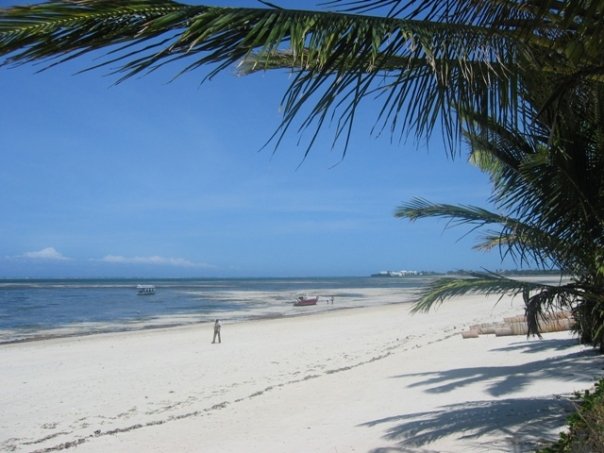
“Mombasa raha” means “Mombasa joy” in Swahili! It sure is a place of joy! This vibrant coastal city is adorned with beaches, seafood, and vibrant nightclubs. It is Kenya’s top destination for sun, fun, and partying!
The long white beaches surrounding Mombasa are crowded with classy tourist hotels and all sorts of fun. Along the beaches in the north and south coast, it’s easy to forget that you’re in a third-world country.
Getting there and around
Mombasa has an international airport and is accessible directly from outside, without traveling through Nairobi. For a budget traveler, flying Thomson Airlines to Mombasa from Gatwick can save quite a lot of money. I’ve had the experience of paying £205 for a return ticket!
From Nairobi, it’s less than an hour’s flight, and the cost won’t be above €50 with local airlines.
For the budget traveler, there’s the more authentic Kenyan experience of traveling by bus or matatu at about €3-€5. Except for the fact that they usually leave from a rather bad part of Nairobi, there’s nothing to fear, beyond some seemingly reckless driving.
Eating, drinking and partying
First-time visitors going for dinner should keep in mind that time awareness is not a predominant feature in the local culture. Assurances like “your dinner will be served very soon” should be interpreted geologically, in the same sense that the Australian tectonic plate is moving “rapidly” towards Asia.
Many of the upmarket places to eat in and nearby Mombasa are found at the tourist hotels. Most tourists who travel to the North Coast are most likely to eat only at the hotels during their entire stay. Although they offer decent food, none are world-class.
On the north side of Mombasa, there are two restaurants that are must-visits. No trip to Mombasa is complete without a meal at the ever-unmissable seafood restaurant Tamarind. Their Mombasa restaurant is far more spectacular than the one in Nairobi, as the visitor gets a stunning view of the sea along with a world-class dinner. The Mombasa Tamarind restaurant also has a dhow (traditional East African sailing boat) that offers dinner cruises each evening. Booking well in advance is recommended.
Nearby the town of Mtwapa, there’s a seaside restaurant called Aquamarine. This place also specializes in high-quality seafood served at a toe-dipping distance from the water. About as unmissable as the Tamarind, but less expensive.
Mombasa itself is a predominantly Muslim city, most of the places to party are located along the North Coast, where most tourists go. One of the most popular nightclubs is called Pirates. It offers a lot of hip-hop and dance from dusk to dawn. During daytime and into the evening hours it’s also a restaurant, so if you intend to do an all-nighter in one place, you can do it here.
In the neighbourhood to Pirates, there’s Tembo also an extremely popular nightclub in Mombasa. This place is spacious and sharp-looking. It’s open for as long as there are guests. Mamba is yet another popular spot, and for those who prefer a more calm and quiet atmosphere, there’s Bora Bora.
Those who want to get away from the tourists and have the Kenyan experience should go to Bob’s. This is the favorite place of middle-class Nairobians on holidays or weekend trips. Bob’s offers a more authentic local atmosphere. It also has fewer women in the world’s oldest profession, than any of the above-mentioned places. The music at Bob’s is also mainly modern Kenyan, so if you want to experience more than just partying with other tourists, then get a taxi and tell the driver to go to Bob’s. Doesn’t matter which day – Kenyans are always in a party mood!
Fort Jesus
For centuries Mombasa has been a centre of power and of conflict in East Africa. Since Vasco da Gama‘s days, the Portuguese almost made a tradition out of occupying the city only to get kicked out after a few years, then send reinforcements to reoccupy the city. Their lack of local support prompted them to build a supposedly impenetrable fortress the Fort Jesus. It still held only for a few years, but is nevertheless one of the main landmarks and tourist attractions in Mombasa today.
Mombasa Old Town
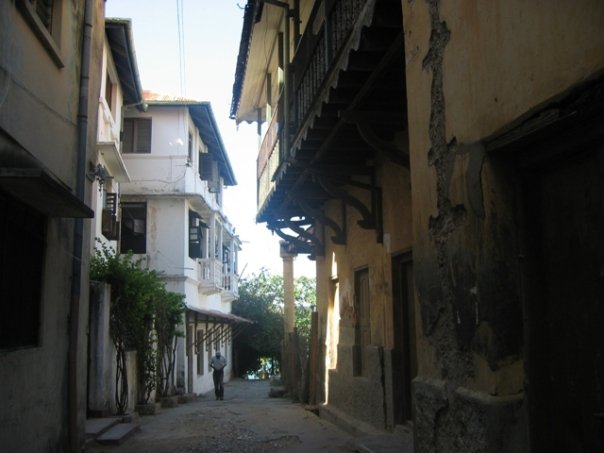
Surrounding the Fort Jesus is the Old Town of Mombasa. Just like Zanzibar and Lamu, it’s a UNESCO World Heritage Site. The Swahili style is almost equally unaltered here with the large carved wooden doors and the general mixture of Indian, Arabic, and African architecture. Like other Swahili towns, the Mombasa Old Town does not have any straight streets.
If you follow the main avenue from Fort Jesus, you’ll end up at Government Square, once the center of power in East Africa. The occasional visitor will probably have no idea where he is, though, as there is no indication whatsoever that this square once hosted all the major governing institutions of British East Africa. With some effort, you will also manage to find the way from there to the seaside of Mombasa, and the Old Port. Once an economic hub for the region, this place now lies hidden, almost forgotten, and by no means easily accessible for the curious traveler.
Even without straight roads, you’ll somehow end up in the market streets when walking through Old Town. The spice market is far smaller than the one at Zanzibar, but nevertheless a very characteristic part of Mombasa. Around the spice market are also hundreds of small shops where, with some luck, you can do all the shopping required for your holiday at bargain prices.
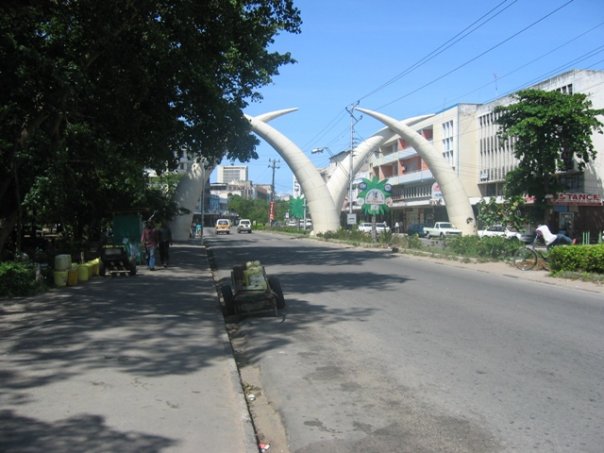
When venturing into the streets of Mombasa, make sure you get to see the Mombasa Tusks – one of the key landmarks of Mombasa. These two pairs of giant tusks form the entrance portal to the city. They are a feature of the city and the country to the point that they are depicted on the 50 shilling notes.
Along the main streets street vendors make and sell traditional snacks and fresh sugarcane juice. This is another sweet and refreshing local specialty not to miss when you are in Mombasa.
Bamburi Park north of Mombasa is a nice place to spend a few afternoon hours. Previously a stone quarry, this area has been turned into a really cute park that samples some of the most characteristic parts of the Coast’s flora and fauna.
Places to stay
The North Coast probably has 50+ tourist hotels, most at around €80-€150. The most famous one is the Whitesands. This legendary place offers everything it takes to spend an entire holiday in one place. Unfortunately, that’s what many tourists do here, believing that they’ve experienced Africa from the comfortable beach couches and pool bars. It is also a very popular place among rich Kenyans who are growing fast in number these days! In my opinion, this place is totally worth it. Nice and extremely comfortable beach bars add to the experience.
In the upmarket category, another place worth mentioning is the Severin. While the Whitesands is more of an international tourist hotel, this place has got a more distinct African style, in the 4-star category. The food is nice here, and just like the Whitesands, it’s located straight at the beach.
For the budget traveler, there is the Baharini Chalets on the north end of the beach. To get there, tell the taxi driver to take off the main road at the same junction as for Severin. Then turn left at the next junction. This beach hotel offers rooms with a kitchen and lots of space at about €10 per night. Expect acceptably clean rooms with no excessive luxury, and fans instead of air conditioning.
This was really interesting. I loved reading it
Great post!