Tag-Archive for » Beach «

Malindi

This legendary fishing town, about 100 kilometres north of Mombasa is remarkably neat, pretty and clean. Once a favoured fishing resort for Ernest Hemingway, this place is now heavily dominated by large Italian diaspora! Although English and Swahili are the official languages in Kenya, many cafés and restaurants in Malindi have menus in Italian only.
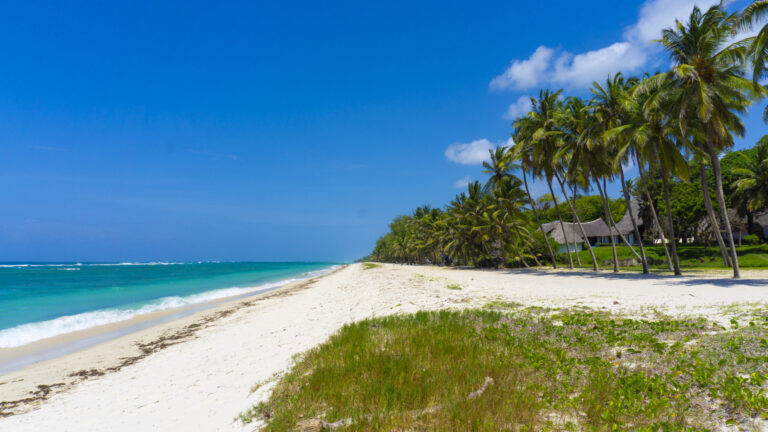
The strong winds from the sea are a sharp contrast to other cities and towns along the East African Coast, who focus more on beach tourism. The long beach is nevertheless ideal for romantic walks in the fresh breeze from the sea. However, if you’re looking for a place to spend the whole day on the beach, basking in the sun, then Malindi probably isn’t the place for you.
Places to eat, drink and party
Malindi is a popular destination for people who want to get away from the typical tourists places and enjoy life in a warm and relaxed atmosphere. The town offers a nice selection of quality restaurants and cafés. There are several Italian Ice Cream bars and cafés, especially on the north side of town.
The ultimate must-visit restaurant in Malindi is The Old Man and the Sea. It would almost be a crime not to eat at this place for anyone visiting Malindi. They’re particularly famous for their seafood, and it’s also one of the places in town that serves proper cocktails. I can never pass through Malindi without eating at this place, and neither should anyone else.
Being a predominantly muslim town, Malindi doesn’t have a wide range of night life alternatives. The hotels in town occasionally hold shows and parties mainly aimed at tourists. Also, there are a few night clubs like the Stardust, where 50% of attendants are in an old, well-know profession, working hard to sell their personal services to the other 50%.
Things to see
The Da Gama Pillar is a Malindi landmark. This monument was erected on the place where Vasco da Gama landed in 1498 on his first trip to Malindi.
A few kilometres south of Malindi is the historic site of the Gede Ruins. This trading town was town was probably built in the 12th century, and bears evidence of having been a relatively wealthy society. 600 years ago, however, the town was mysteriously abandoned and gradually forgotten. It’s an interesting place to see, and an hour well spent for those interested in history.
While Malindi has been around for a long time, little is left of the old Swahili town that Vasco da Gama saw when he landed. One oddly placed monument however, reminds both residents and visitors of the pre-islamic past of this now mainly muslim town. Just outside a large mosque, an old fertility symbol in the shape of a large erected penis stands in the middle of a muslim cemetary.
Places to stay
During my 3 trips to Malindi, I’ve have the pleasure of staying at Lawford, and the disgrace of staying at the African Pearl.
African Pearl Hotel at first seems like a nice place, with decent rooms, a swimming pool, good atmosphere at a good price. When I stayed there with my girlfriend in 2003, however, some items were stolen by people breaking into our room during the day. The owner, Jeff, at first appeared very apologetic about the incident. When we left, he promised to refund our losses if police failed to recover the stolen items within a week. When, after a while, I tried to remind him about his promise, he started threatening me via SMS. I’ve since heard several others tell about negative experiences at this place. My advise to anyone traveling to Malindi: If the African Pearl is the only place with rooms available, it’s better to sleep on the street!
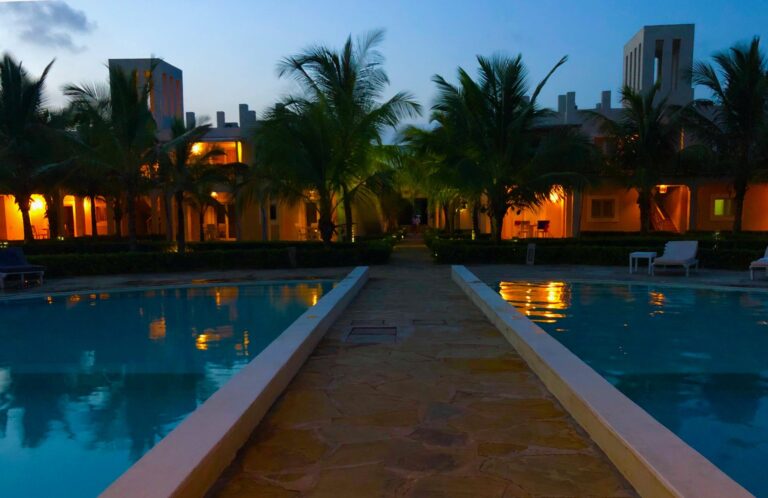
Lawfords Hotel is a family run hotel where most guests, like the owner, are Italian. The hotel complex encloses a huge lawn that goes all the way from just outside the town centre, to the beach. The place has a really personal and friendly touch. Rooms are nice and clean, and no complaints about the food! The place is also reasonably priced at about $100 for a very nice double room.
Getting there and away
Malindi has an airport, so the fastest way to travel is naturally by air. Travelling by road offers a good view of the Kenyan Coast scenery, and is strongly advised at least once.
The road northwards, to Lamu is alledgedly in a good shape now (it sure wasn’t in 2003, when I experienced a bumpy 5-hour ride in the back of a bus with the driver playing and re-playing the same cassette of islamic prayers for the whole ride!). The one southwards, to Kilifi and Mombasa is only good in some sections, but has a lot of potholes, so the driving should be done by someone experienced on African roads.
Getting between Malindi and Mombasa by public transport is never a problem, as there are buses and matatus all the time. One you get into one, you won’t even have to wait for long before it fills up. Buses and matatus usually don’t have time schedules – they leave when they are full.
A taxi offers maximum flexibility in terms of stopping for food bites or snapshots. The 100 km between Malindi and Mombasa won’t exactly blow your holiday budget. On my last trip, in January 2007, the taxi to Mombasa cost me KSh 3,500 (€35). Foreigners who don’t speak Swahili should expect paying KSh 5-6000.

This legendary fishing town, about 100 kilometres north of Mombasa is remarkably neat, pretty and clean. Once a favoured fishing resort for Ernest Hemingway, this place is now heavily dominated by large Italian diaspora! Although English and Swahili are the official languages in Kenya, many cafés and restaurants in Malindi have menus in Italian only.

The strong winds from the sea are a sharp contrast to other cities and towns along the East African Coast, who focus more on beach tourism. The long beach is nevertheless ideal for romantic walks in the fresh breeze from the sea. However, if you’re looking for a place to spend the whole day on the beach, basking in the sun, then Malindi probably isn’t the place for you.

Eating, drinking and partying

Malindi is a popular destination for people who want to get away from the typical tourists places and enjoy life in a warm and relaxed atmosphere. The town offers a nice selection of quality restaurants and cafés. There are several Italian Ice Cream bars and cafés, especially on the north side of town.

The ultimate must-visit restaurant in Malindi is The Old Man and the Sea. It would almost be a crime not to eat at this place for anyone visiting Malindi. They’re particularly famous for their seafood, and it’s also one of the places in town that serves proper cocktails. I can never pass through Malindi without eating at this place, and neither should anyone else.

Being a predominantly muslim town, Malindi doesn’t have a wide range of night life alternatives. The hotels in town occasionally hold shows and parties mainly aimed at tourists. Also, there are a few night clubs like the Stardust, where 50% of attendants are in an old, well-know profession, working hard to sell their personal services to the other 50%.

Things to see

The Da Gama Pillar is a Malindi landmark. This monument was erected on the place where Vasco da Gama landed in 1498 on his first trip to Malindi.

A few kilometres south of Malindi is the historic site of the Gede Ruins. This trading town was town was probably built in the 12th century, and bears evidence of having been a relatively wealthy society. 600 years ago, however, the town was mysteriously abandoned and gradually forgotten. It’s an interesting place to see, and an hour well spent for those interested in history.

While Malindi has been around for a long time, little is left of the old Swahili town that Vasco da Gama saw when he landed. One oddly placed monument however, reminds both residents and visitors of the pre-islamic past of this now mainly muslim town. Just outside a large mosque, an old fertility symbol in the shape of a large erected penis stands in the middle of a muslim cemetary.

Hotels

During my 3 trips to Malindi, I’ve have the pleasure of staying at Lawford, and the disgrace of staying at the African Pearl.

African Pearl Hotel at first seems like a nice place, with decent rooms, a swimming pool, good atmosphere at a good price. When I stayed there with my girlfriend in 2003, however, some items were stolen by people breaking into our room during the day. The owner, Jeff, at first appeared very apologetic about the incident. When we left, he promised to refund our losses if police failed to recover the stolen items within a week. When, after a while, I tried to remind him about his promise, he started threatening me via SMS. I’ve since heard several others tell about negative experiences at this place. My advise to anyone traveling to Malindi: If the African Pearl is the only place with rooms available, it’s better to sleep on the street!

Lawfords Hotel is a family run hotel where most guests, like the owner, are Italian. The hotel complex encloses a huge lawn that goes all the way from just outside the town centre, to the beach. The place has a really personal and friendly touch. Rooms are nice and clean, and no complaints about the food! The place is also reasonably priced at about $100 for a very nice double room.

Getting around and away

Malindi has an airport, so the fastest way to travel is naturally by air. Travelling by road offers a good view of the Kenyan Coast scenery, and is strongly advised at least once.

The road northwards, to Lamu is alledgedly in a good shape now (it sure wasn’t in 2003, when I experienced a bumpy 5-hour ride in the back of a bus with the driver playing and re-playing the same cassette of islamic prayers for the whole ride!). The one southwards, to Kilifi and Mombasa is only good in some sections, but has a lot of potholes, so the driving should be done by someone experienced on African roads.

Getting between Malindi and Mombasa by public transport is never a problem, as there are buses and matatus all the time. One you get into one, you won’t even have to wait for long before it fills up. Buses and matatus usually don’t have time schedules – they leave when they are full.

A taxi offers maximum flexibility in terms of stopping for food bites or snapshots. The 100 km between Malindi and Mombasa won’t exactly blow your holiday budget. Expect to pay €60-€70 for the ride, or significantly less if you manage to do the bargaining in Swahili!

Category: Travel  Tags: , ,  One Comment

Zanzibar

For centuries the economic and political powerhouse of the region, this quiet little island today offers an unsurpassed tourist experience whether beaches, or culture and history are the the main attractions for the traveller.

The main island in the archipelago, Unguja, is commonly known as Zanzibar, while the other major one, Pemba, is rarely visited by foreigners, and has little tourism industry. It’s nevertheless said to be a pretty sight, so I’ll try to pass by there on my next trip.

Stone Town was home to the Zanzibari Sultans, and was the regions’s major trading point for spices and slaves . At one point in time, 90% of the world’s cloves came from the island, and more than a million men and women captured from the African mainland were sold in Stone Town during the slave trade.

Stone Town is today a World Heritage site. Unfortunately, most tourists only go there for the beaches, and only pass briefly through Stone Town.

Stone Town

Stone Town is the self-declared capital of the Swahili culture. Historically, it’s a cultural melting pot, with strong Persian, Indian and Arabic, as well as Portuguese and British influence. The date of its foundation is unknown, but it has been around for at least 3 centuries.

Stone Town features the same Swahili architecture as Lamu and Old Mombasa – a mixture of Indian, Arabic and African styles – with the characteristic wooden doors and enclosed wooden verandas, and the narrow, curved streets.

Starting downtown, the Forodhani Gardens are the natural starting point for any exploration of Stone Town. By night, this park turns into a huge open-air buffet barbeque where local fishermen sell fresh fish, squid, mussles, crabs, lobster and other seafood from improvised stalls. Food is then grilled as you wait, ready for immediate consumption at one of the nearby benches. This is a remarkable, recommendable and tasty feature of Stone Town.

Facing the sea next to Forodhani Gardens is a restaurant with live music in he evenings and many tables in a toe-dipping distance from the water. Food and drinks are good, so this place is worth a visit.

Facing the Forodhani gardens is also the Sultan’s Palace, aka. the House of Wonders. This is perhaps the most characteristic of all the buildings in Stone Town. Once the regional centre of power, this is now a museum of the Swahili civilization. The museum is impressively content-rich and interesting, so make sure to plan for enough time when visiting this place! The upper veranda also offers a nice view of the Stone Town seaside.

Just next to the Sultan’s Palace is an Omanese fortress, a reminder of the previous Omanese dominance of the island. Apart from being a historically interesting building, it has nothing particularly interesting to see. Inside, there are just some curio shos that sell the exact same things as other such shops on the island, but at inflated prices.

Northward towards the port, the restaurant Mercury’s (named after the singer Freddy Mercury who was born on Zanzibar) is one of my personal favorites in Stone Town. The place has good food and nice drinks, and an atmosphere you won’t forget. Tables facing the beach may be difficult to get, so advance booking is recommended. Live music is quite frequent but not every evening. The place also has arabic-style sheeshas.

Zanzibar being a predominantly muslim society, alcohol does not have a central position in the local culture, although it’s tolerated. Binge drinking and public drunkenness are not! Although most locals are too polite let insensitive tourists know even when they’re blatantly violating local customs, such behavior is quietly frowned upon, and considered extremely offensive.  There are some few nice bars though. In Stone Town, the Serena Hotel has one of the, and Mercury’s in another. In the villages along the coast, the hotels serve drinks, and in Nungwi, the tourist hotspot, there are plenty!

Spices was once a cornerstone of the Zanzibari economy. The former sultanate was once the world’s biggest exporter of spices, and the industry still provides work to many people on the island. The old Spice Market still stands as a witness to the important role the industry once had on the island.

The horrors of the slave trade are fortunately a closed chapter in the history of Zanzibar. The Slave Market, that would have stood as an important historic reminder, has unfortunately been razed. The basement where slaves were held captured awating their auctioning has however been preserved.

Stone Town offers a lot of great opportunities for curio shopping. Of course, most things you get there are the exact same things as you get in curio markets elsewhere in the region, and if you have the opportunity, postpone all such shopping until you get to the Maasai Market in Nairobi.

Swahili cuisine

The Swahili cuisine is a colorful and tasty experience. Like many other aspects of Swahili culture, this is also a rich mixture of Indian, Arabic, Persian and African influences. Seafood is predominant, and the cusine features a broad variety of spices and fruits. Fish in coconut sauce, and prawns piri-piri are perhaps among the most famous Swahili dishes. In Zanzibar, the cultural conscience is very strong, and even modest and unassuming restaurants take pride in serving delicious and feature-rich dishes. When venturing outside of Stone Town, you will undoubtedly notice small local restaurant huts along the beaches where the owners do their utmost to get you inside. This can be a surprisingly good idea, but it’s advised to advance book and choose your meal at least 2 hours in advance. In these places, quality matters a lot. Time, not at all!

Spice Tour

A popular attraction is the Spice Tour. This one can be booked through most hotels and is half a day well spent. Many of the operators offer full-day tours where the afternoon is spent on the beach. That’s an afternoon wasted, as beaches close to Stone Town are nothing compared to those a bit further out on the island.

Spice production and trade was previously a cornerstone of the Zanzibari economy. The spice plantations are still in use, but today serve the added purpose of tourist attractions. On this roughly 3 hour long sightseeing, travellers get to see how cloves, cinnamon, cardamoms, pepper, ginger, saffron and nutmeg are actually grown, with plenty of opportunities to taste the fresh spices, as well as some exotic fruits that even experienced travellers have hardly ever heard about before.

Mombasa

Mombasa is one of Kenya’s most popular tourist destinations, for both foreigners and Kenyans. The long white beaches surrounding Mombasa are crowded with tourist hotels and all sorts of entertainment. In places like this, it’s easy to forget that you’re in a third world country.
GETTING THERE, AROUND AND AWAY
Mombasa has an international airport and is accessible directly from outside, without travelling through Nairobi. For a budget traveller, flying Thomson Airlines to Mombasa from Gatwick can save quite a lot money. I’ve had the experience of paying £205 for a return ticket!
For those arriving the traditional way – that is via Nairobi with BA, Brussels Airlines or Kenya Airways/KLM, there’s the choice between Kenya Airways and domestic airline called Fly540. The latter offers return tickets Nairobi-Mombasa from KSh 5400 (€54), which is less than half the price of Kenya Airways. Differences in quality are minimal.
For the real budget traveller, there are always plenty of matatus from Nairobi to Mombasa and back. Buses from Nairobi to Mombasa have the drawback of usually leaving from very bad parts of town late in the evening. Returning to Nairobi has the same challenges. The most comfortable bus alternatives are Msafiri and EasyCoach – at least they were a couple of years ago, when I last took one.
PLACES TO EAT, DRINK AND PARTY
When going to restaurants, first-time visitors should keep in mind that time awareness is not a predominant feature in the local culture. Terms like “soon”, right now”, and “quickly” should be interpreted in the geological sense, ie “your dinner will be served in a moment” / “the Himalaya formed as the result of a rapid continental collision.
Most upmarket places to eat in and nearby Mombasa are found at the tourist hotels. Most tourists who travel to North Coast are most likely to eat only at the hotels during their entire stay. Although they offer decent food, none are world class.
On the north side of Mombasa, there are two restaurants that are must-visits for anyone passing through the place. First and foremost, there is the ever unmissable Tamarind, present in bith Nairobi and Mombasa. Their Mombasa restaurant is far more spectacular than the Nairobi one, as the visitor gets a stunning view of the sea along with a 5-star dinner. The Mombasa Tamarind restaurant also has a dhow (traditional East African sailing boat) that offers dinner cruises each evening. booking in advance is recommended.
Nearby the town of Mtwapa, there’s a seaside restaurant called Aquamarin. this place also specialises in high quality seafood served at a toe-dipping distance from the water. About as unmissable as the Tamarind, but less expensive.
Mombasa itself being a predominantly Muslim city, most of the places to party are located along the North Coast, where most tourists go. One of the most popular night clubs is called Pirates. It offers a lot of hip hop and dance from dusk till dawn. During daytime and into the evening hours it’s also a restaurant, so if you intend to do an all-nighter in one place, you can do it here.
In the neighbourhood to Pirates, there’s Tembo – also an extremely popular night club in Mombasa. This place has a lot of space and a stunning music system. It’s open for as long as there are guests. Mamba is yet another popular spot, and for those who prefer a more calm and quiet atmosphere there’s Bora Bora.
For those who want to get away from the tourist crowd and experience something more truly Kenyan, Bob’s is a place worth visiting. This is the favorite place of Nairobians on holidays or weekend tripe .Bob’s offers more of the truly Kenyan atmosphere – and fewer women in the world’s oldest profession – than any of the above mentioned night clubs. The music at Bob’s is also mainly modern Kenyan, so any visitor wanting to experience more than partying with other tourists should jump into a taxi and tell the driver to go to Bob’s. Doesn’t matter which day – Kenyans are always in a party mood!
THINGS TO SEE
For centuries Mombasa has been a centre of power and a center of conflict in East Africa. Since Vasco da Gama’s days, the Portuguese almost made a tradition out of occupying the city only to get kicked out after a few years, then send reinforcements to reoccupy the city. Their lack of local popularity prompted them to build a supposedly impenetrable fortress – the Fort Jesus – which is one of the main landmarks and tourist attractions in Mombasa today.
Surrounding the Fort Jesus is the Old Town of Mombasa. Just like Zanzibar and Lamu, it’s a World Heritage Site. The Swahili style is almost equally unaltered here with the large carved wooden doors and the general mixture of Indian, Arabic and African architecture. Like other Swahili towns, the Mombasa Old Town does not have any straight streets.
If you follow the main avenue from Fort Jesus, you’ll end up at Government Square, once the centre of power of East Africa. The occasional visitor will probably have no idea where he is, as there is no indication whatsoever that this square once hosted all the major governing institutions of British East Africa. With some effort, you will also manage to find the way from there to the seaside of Mombasa, and the Old Port. Once an economic hub for the region, this place now lies hidden, almost forgotten and by no means easily accessible for the curious traveller.
Even without straight roads, you’ll somehow end up in the market streets when walking through Old Town. The spice market is far smaller than the one at Zanzibar, but nevertheless a a very characteristic part of Mombasa. Around the spice market are also hundreds of small shops where, with some luck, you can do all the shopping required for your holiday at bargain prices.
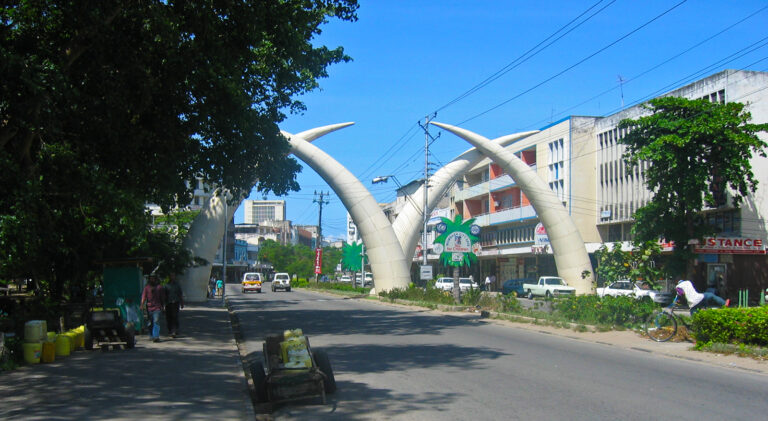
When venturing in the streets of Mombasa, make sure you get to see the Tusks – one of the very landmarks of Mombasa. These two pairs of giant tusks form the entrance portal to the city. They are a feature of the city and the country to the point that they are depicted on the KSh 50 notes.
At several places along the main streets you can buy fresh squeezed sugarcane juice – a sweet and refreshing experience which is worth a try.
The Bamburi Park north of Mombasa is a nice place to spend a few afternoon hours. Previously a stone quarry, this area has been turned into a pretty little park that samples some of the most characteristic parts of the Coast’s flora and fauna.
PLACES TO STAY
The North Coast probably has 50+ tourist hotels, mostly in the $100+ category. The most famous one is the Whitesands. This legendary place offers everything it takes to spend an entire holiday in one place, and unfortunately many tourists do when they stay here, believing that they’ve experienced Africa from the comfortable beach couches and pool bars. It’s also a very popular place among rich Kenyans – who are growing fast in number these days! Doubles rooms are usually somewhere around $200 but with the right connections you can get them half price! In my opinion, this place is totally worth it. Nice and extremely comfortable beach bars add on to the experience.
In the upmarket category, another place worth mentioning is the Severin. While the Whitesands is more of an international tourist hotel, this place has got a more distinct African style, still in the 5 star category. Food is nice here, and just like the Whitesands, it’s located straight at the beach.
For the budget traveller, there is the Baharini Chalets on the north end of the beach. To get there, tell the taxi driver to take off the main road at the same junction as for Severin, but to take left and to the end in the next juction. This beach hotel offers rooms with a kitchen and lots of space at about $15 per night. Expect only acceptably clean rooms with no excessive luxury, and fans instead of air conditioning. A cheap but acceptable alternative for the budget traveller.

“Mombasa raha” – Kenya’s city of joy!

Kenyans usually refer to Mombasa as “Mombasa raha” – Mombasa joy! An increasingly popular destination for the fast-growing Kenyan middle class, Mombasa is a vibrant place of sun, fun and partying!

The long white beaches surrounding Mombasa are crowded with classy tourist hotels and all sorts of fun.  Along the beaches in the north and south coast, it’s easy to forget that you’re in a third world country.

Getting there and around

Mombasa has an international airport and is accessible directly from outside, without travelling through Nairobi. For a budget traveller, flying Thomson Airlines to Mombasa from Gatwick can save quite a lot money. I’ve had the experience of paying £205 for a return ticket!

From Nairobi, it’s less than an hours flight, and the cost won’t be above €50 with a local airlines.

For the budget traveller, there’s the more authentic Kenyan experience of travelling by bus or matatu at about €3-€5. Except the fact that they usually leave from a rather bad part of Nairobi, there’s nothing to fear, beyond some seemingly reckless driving.

Eating, drinking and partying

First-time visitors going for dinner should keep in mind that time awareness is not a predominant feature in the local culture. Assurances like “your dinner will be served very soon” should be interpreted geologically, in the same sense that the Australian tectonic plate is moving rapidly towards Asia.

Many of the upmarket places to eat in and nearby Mombasa are found at the tourist hotels. Most tourists who travel to North Coast are most likely to eat only at the hotels during their entire stay. Although they offer decent food, none are world class.

On the north side of Mombasa, there are two restaurants that are must-visits. No trip to Mombasa is complete without a meal ever unmissable seafood restaurant Tamarind.  Their Mombasa restaurant is far more spectacular than the one in Nairobi, as the visitor gets a stunning view of the sea along with a world-class dinner. The Mombasa Tamarind restaurant also has a dhow (traditional East African sailing boat) that offers dinner cruises each evening. Booking well in advance is recommended.

Nearby the town of Mtwapa, there’s a seaside restaurant called Aquamarin. this place also specialises in high quality seafood served at a toe-dipping distance from the water. About as unmissable as the Tamarind, but less expensive.

Mombasa itself being a predominantly Muslim city, most of the places to party are located along the North Coast, where most tourists go. One of the most popular night clubs is called Pirates. It offers a lot of hip hop and dance from dusk till dawn. During daytime and into the evening hours it’s also a restaurant, so if you intend to do an all-nighter in one place, you can do it here.

In the neighbourhood to Pirates, there’s Tembo – also an extremely popular night club in Mombasa. This place is spacious and sharp-looking. It’s open for as long as there are guests. Mamba is yet another popular spot, and for those who prefer a more calm and quiet atmosphere there’s Bora Bora.

Those who want to get away from the tourists  and have cool Kenyan experience should go to Bob’s. This is the favorite place of middle-class Nairobians on holidays or weekend trips. Bob’s offers a more authentic local atmosphere (and has far fewer women in the world’s oldest profession than any of the above-mentioned places). The music at Bob’s is also mainly modern Kenyan, so the visitor wanting to experience more than just partying with other tourists should jump into a taxi and tell the driver to go to Bob’s. Doesn’t matter which day – Kenyans are always in a party mood!

Things to see

For centuries Mombasa has been a centre of power and of conflict in East Africa. Since Vasco da Gama’s days, the Portuguese almost made a tradition out of occupying the city only to get kicked out after a few years, then send reinforcements to reoccupy the city. Their lack of local support prompted them to build a supposedly impenetrable fortress – the Fort Jesus. Even that only held for a few year, but is nevertheless one of the main landmarks and tourist attractions in Mombasa today.

Surrounding the Fort Jesus is the Old Town of Mombasa. Just like Zanzibar and Lamu, it’s a World Heritage Site. The Swahili style is almost equally unaltered here with the large carved wooden doors and the general mixture of Indian, Arabic and African architecture. Like other Swahili towns, the Mombasa Old Town does not have any straight streets.

If you follow the main avenue from Fort Jesus, you’ll end up at Government Square, once the centre of power of East Africa. The occasional visitor will probably have no idea where he is, as there is no indication whatsoever that this square once hosted all the major governing institutions of British East Africa. With some effort, you will also manage to find the way from there to the seaside of Mombasa, and the Old Port. Once an economic hub for the region, this place now lies hidden, almost forgotten and by no means easily accessible for the curious traveller.

Even without straight roads, you’ll somehow end up in the market streets when walking through Old Town. The spice market is far smaller than the one at Zanzibar, but nevertheless a a very characteristic part of Mombasa. Around the spice market are also hundreds of small shops where, with some luck, you can do all the shopping required for your holiday at bargain prices.

When venturing in the streets of Mombasa, make sure you get to see the Tusks – one of the very landmarks of Mombasa. These two pairs of giant tusks form the entrance portal to the city. They are a feature of the city and the country to the point that they are depicted on the KSh 50 notes.

At several places along the main streets you can buy fresh pressed sugarcane juice – a sweet and refreshing local specialty not to be missed when in Mombasa.

The Bamburi Park north of Mombasa is a nice place to spend a few afternoon hours. Previously a stone quarry, this area has been turned into a really cute park that samples some of the most characteristic parts of the Coast’s flora and fauna.

Where to stay

The North Coast probably has 50+ tourist hotels, most at around €80-€100. The most famous one is the Whitesands. This legendary place offers everything it takes to spend an entire holiday in one place, and unfortunately many tourists do when they stay here, believing that they’ve experienced Africa from the comfortable beach couches and pool bars. It’s also a very popular place among rich Kenyans – who are growing fast in number these days! In my opinion, this place is totally worth it. Nice and extremely comfortable beach bars add on to the experience.

In the upmarket category, another place worth mentioning is the Severin. While the Whitesands is more of an international tourist hotel, this place has got a more distinct African style, still in the 5 star category. Food is nice here, and just like the Whitesands, it’s located straight at the beach.

For the budget traveller, there is the Baharini Chalets on the north end of the beach. To get there, tell the taxi driver to take off the main road at the same junction as for Severin, but to take left and to the end in the next juction. This beach hotel offers rooms with a kitchen and lots of space at about €10 per night. Expect only acceptably clean rooms with no excessive luxury, and fans instead of air conditioning.